Pet sitter, home boarding, or pet hotel: what should you choose?
If you are going away, there are more than two possible arrangements for your pet.
You can leave your pet at home and ask someone to visit. You can find a sitter who temporarily stays in your home. You can take your pet to a sitter’s home. Or you can choose a pet hotel.
There is no universally best option. Drop-in visits may be the calmest solution for one cat, while another cat may do better with a person nearby for most of the day. A dog that adapts well to new places may be very comfortable with home boarding. For another animal, the conditions at a particular good pet hotel may work better.
Instead of comparing service names, it is more useful to compare where the animal will live, how much time a person will spend nearby, and how much of the animal’s normal life will change.
First, clarify the terminology
The term “pet sitter” can be confusing because it describes several different services.
A pet sitter may:
- visit a pet at home once or several times per day;
- stay overnight or live in the owner’s home for several days;
- welcome the pet into the sitter’s own home.
“Boarding” usually means that the animal temporarily lives with another person, for example in the sitter’s home.
A pet hotel is a dedicated facility for animals staying away from home.
That is why “pet sitter or boarding?” is not always the right question. Home boarding can itself be a pet-sitting service.
The four main options
| Arrangement | Where the pet stays | How much human presence | Does the familiar place change? |
|---|---|---|---|
| Drop-in visits | In their own home | Several visits per day | No |
| Live-in sitter | In their own home | Almost continuously | No |
| Home boarding | In the sitter’s home | A person is nearby most of the time | Yes |
| Pet hotel | In the facility | Depends on the hotel | Yes |
This distinction already makes the decision much clearer.
Quick decision helper
Which care arrangement should you compare?
Answer four questions. The result cannot assess your pet personally, but it can help narrow the options.
Drop-in visits: the pet remains at home
A sitter arrives at agreed times to feed the pet, refresh the water, clean the litter box, walk the dog or play with the cat, and check that everything is normal.
The main advantage is obvious: the animal does not need to move at all.
That can be particularly important for pets that are strongly attached to their territory and are comfortable without a person between visits. For many cats, this arrangement can work very well.
The disadvantage is equally clear: the animal spends most of the day alone.
If the pet struggles with being alone or needs closer observation, a few short visits may not be enough.
See our home visits for pets in Novi Sad →
A sitter stays in your home
This arrangement creates the fewest changes for the pet.
The animal keeps:
- the familiar home;
- familiar smells;
- the usual sleeping place;
- the normal walking route;
- the usual litter box;
- most of the normal routine.
A person is there as well.
From the animal’s perspective, this can be an excellent option.
The difficult part is often a human question: are you comfortable with another person living in your home for several days or weeks?
For some people that is not a problem. For others it is the main reason to choose a different arrangement.
Home boarding: the pet stays in the sitter’s home
With home boarding, an animal temporarily becomes an ordinary resident of another house or apartment.
This is the arrangement we provide.
A dog goes for walks, eats, sleeps, and spends time with people. A cat can have a separate space. If the pet is normally allowed on the sofa or bed, there is little reason to introduce completely new house rules just for the boarding stay.
The main difference from drop-in visits is that the animal is not alone for most of the day.
The main difference from a live-in sitter is that the pet still needs to move to a new place.
See how our home pet boarding in Novi Sad works →

Check available dates
Choose approximate dates to see availability and an estimated price. We’ll confirm everything in Telegram.
First choose an arrival date.
How are boarding days calculated?
We charge by 24-hour periods starting from the check-in time. For example, if your pet arrives on September 8 at 9:00 AM and is picked up on September 10 at 9:00 AM, that is 2 boarding days. If pick-up is later than the original check-in time, the next billable period begins. We confirm the exact check-in and pick-up times before the stay.
Pet hotels
Pet hotels vary widely, so it is not helpful to talk about all of them as if they offered the same experience.
At one hotel, animals may stay in individual kennels. Another may use rooms. Some facilities host many animals at the same time, while others remain small. Some have staff present around the clock, while others follow a different schedule.
The words “pet hotel” therefore say very little about quality by themselves.
Specialized facilities and clear processes can be advantages.
For a particular animal, the number of unfamiliar smells and animals or a more fixed routine can be disadvantages.
What matters is the specific place, not the sign on the door.
What may work best for a dog
I would start with three questions.
Can the dog stay alone?
If the dog comfortably spends several hours alone, many options remain available.
If the dog becomes extremely anxious, barks, damages things, or has never learned to remain alone, two short visits per day may be a poor fit.
It may be more sensible to consider:
- a live-in sitter;
- home boarding;
- a hotel that genuinely provides the required level of human presence.
How does the dog react to a new place?
Some dogs explore an apartment within twenty minutes and start looking for the sofa.
Others need much more time.
If a dog finds any change of environment very difficult, having a sitter stay in the dog’s own home may be the gentlest option.
How does the dog behave around other animals?
You should always ask this question.
Two cats live in our home.
A dog wanting to approach, sniff, or play is not automatically a problem for us. But if a dog actively hunts cats, cannot disengage, or shows serious aggression, we would advise the owner to find boarding without resident cats.
Read about our dog boarding in Novi Sad →

What may work best for a cat
The decision is often different for cats.
Familiar territory can be very important. If a cat:
- is comfortable alone;
- eats normally without the owner present;
- does not need continuous monitoring;
- finds travel and new places very stressful,
then drop-in visits at home may be easier than boarding.
If the cat needs closer supervision, medication, or simply does not cope well without people for most of the day, home boarding or a live-in sitter may be worth considering.
There is another important point: a cat staying with a sitter does not necessarily have to meet other cats.
We have three separate rooms. If a guest cat is more comfortable living separately from our cats, that is what we can arrange.
Read about our cat boarding in Novi Sad →
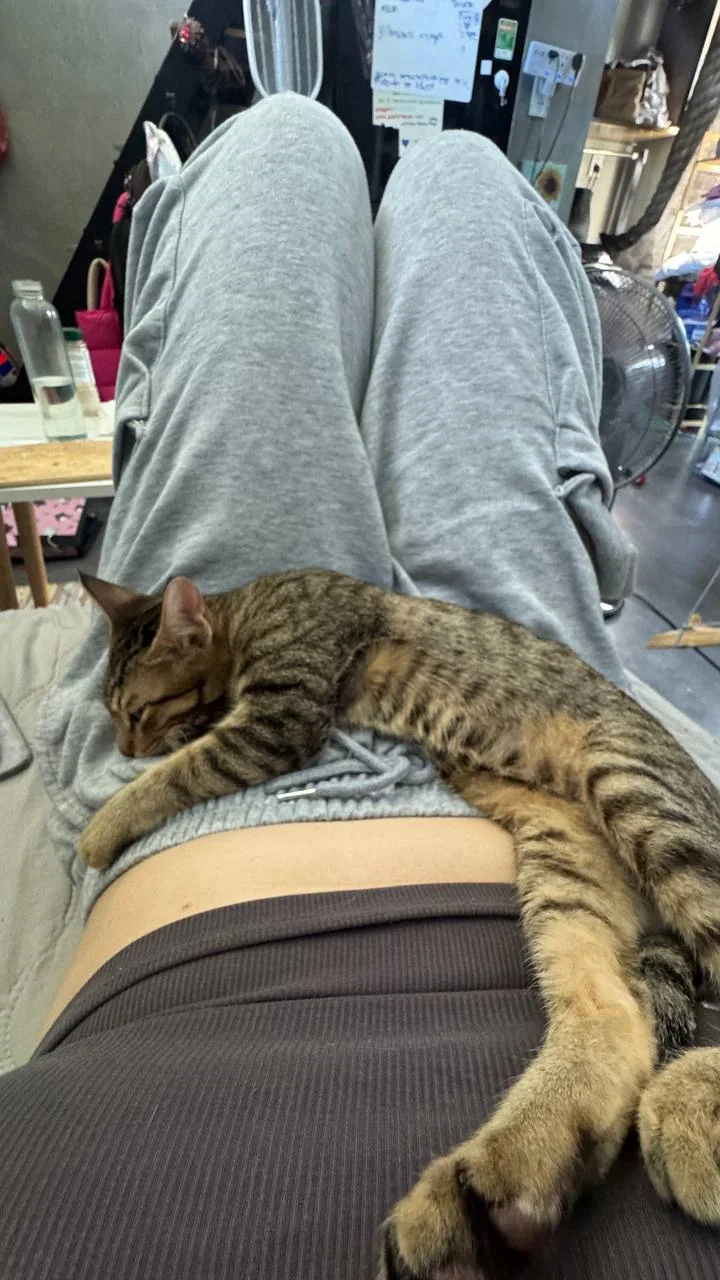
What should you choose for an anxious pet?
The word “home” does not guarantee a stress-free stay.
Likewise, the word “hotel” does not automatically mean an animal will have a bad experience.
Ask practical questions instead:
- How many animals will be there?
- Can animals be separated?
- How long will the pet be without a person?
- Can the normal feeding and walking routine be preserved?
- Where will the animal sleep?
- Can familiar belongings come along?
- What happens if the animal hides or becomes anxious?
- How often will you receive photos and videos?
- What happens if there is a health problem?
The answers tell you much more than the service label.
If the pet takes medication
The specific care matters more than the category of service.
Find out in advance:
- whether the person can give the medication;
- at what times;
- how important the exact schedule is;
- how quickly a change in the animal’s condition would be noticed;
- what would happen if the animal suddenly became unwell.
If the care is complex, choose based on whether the person or facility can reliably follow the instructions, not on price or attractive photos alone.
In short: when to consider each option
Drop-in visits may work when the pet is better off at home and is comfortable without a person between visits.
A live-in sitter may work when familiar surroundings and consistent human presence both matter.
Home boarding may work when the pet benefits from frequent human contact and can cope with temporarily moving into the sitter’s home.
A pet hotel may work when the conditions and facilities of that particular hotel suit the animal.
The best choice is not a service category in isolation. It is the specific set of conditions for a specific animal.
Frequently asked questions
Which is better: home boarding or a pet hotel?
It depends on the animal and the actual conditions. Home boarding is usually closer to ordinary life in a house or apartment. A pet hotel may offer more specialized facilities. Look beyond the name and ask about the number of animals, routine, separation options, and human presence.
How is home boarding different from pet sitting?
Home boarding is one form of pet sitting: the pet stays in the sitter’s home. Pet sitting can also mean drop-in visits or a sitter staying in the owner’s home.
Which is better for a cat: boarding or visits at home?
If a cat is comfortable alone and strongly attached to its territory, visits at home are often easier. If the cat needs company or closer supervision, boarding may be more suitable.
Can a dog be cared for through drop-in visits only?
Yes, if that particular dog is comfortable alone and the schedule meets its needs for walks, food, care, and interaction. For a dog that cannot stay alone at all, another arrangement is likely to be better.