How to prepare a cat for boarding
Preparing a cat usually does not mean trying to teach the cat to accept every possible new experience in advance.
The opposite is often more useful: the more familiar things and habits you can preserve, the better.
Food, the litter box, litter, sleeping place, and normal rhythm can all make a new place feel a little less unfamiliar.
A short checklist
Before boarding:
- check the vaccination requirements;
- bring the normal food;
- bring the usual litter;
- bring the cat’s own litter box if useful;
- bring medication and leave precise instructions;
- explain where the cat normally sleeps and how it behaves around unfamiliar people;
- bring a few familiar belongings;
- do not assume that the cat must become sociable immediately.
Pre-trip checklist
Check your cat's preparation
Checked: 0 of 8
Selections are stored only on this page and reset when it is reloaded.
Check vaccinations in advance
Requirements vary between sitters and boarding facilities, so ask well before the day of arrival.
For cats staying with us, we require:
- a current core vaccine;
- a rabies vaccine;
both administered within the previous 12 months.
If you are unsure what is recorded in the vaccination passport, check it in advance rather than on arrival day.
Keep the normal food
A new home is already a substantial change.
It is therefore better to keep the normal food.
Explain:
- what the cat eats;
- how much;
- how many times per day;
- whether the food is wet or dry;
- whether treats are allowed;
- any restrictions.
If the cat eats only one particular food, bring enough for the full stay.
The normal litter box and familiar litter can help
Not every cat needs its exact old litter box.
But if it is practical to bring it, there is little reason not to.
We would be even less inclined to change the litter without a reason.
For a cat, the familiar:
- smell;
- litter type;
- box size;
- normal toilet setup
can be important details.
Bring a few things that smell like home
This could include:
- a bed;
- a blanket;
- a toy;
- a small scratching pad;
- something near which the cat likes to sleep.
There is no need to move half the apartment.
A few things that already smell like home are enough.
What about the carrier?
If the cat hates the carrier, at least avoid taking it out of a cupboard five minutes before departure.
Leaving the carrier open in the home beforehand is reasonable if the cat can approach it, smell it, and rest nearby without pressure.
The goal is not to complete an intensive carrier-training program in a week.
We simply want to avoid the cat’s first encounter with the carrier in six months happening at exactly the same moment the owner leaves.
Check available dates
Choose approximate dates to see availability and an estimated price. We’ll confirm everything in Telegram.
First choose an arrival date.
How are boarding days calculated?
We charge by 24-hour periods starting from the check-in time. For example, if your pet arrives on September 8 at 9:00 AM and is picked up on September 10 at 9:00 AM, that is 2 boarding days. If pick-up is later than the original check-in time, the next billable period begins. We confirm the exact check-in and pick-up times before the stay.
Tell the sitter what your cat is actually like
For example:
- Does the cat enjoy people?
- Is the cat afraid of strangers?
- Does the cat hide when visitors arrive?
- Where does the cat normally sleep?
- Does the cat like sitting on high shelves?
- Can the cat be picked up?
- How does the cat show that it has had enough contact?
- How does the cat behave around other cats?
- How does the cat behave around dogs?
- Does the cat take medication?
- Has the cat had litter-box problems?
- How has the cat reacted to the owner’s absence before?
“Very sweet” is a pleasant description for an Instagram photo, but practical details are much more useful to a sitter.
Hiding is not a failed boarding stay
Some cats arrive and begin exploring everything within half an hour.
Others choose a place under the bed and observe for a while.
We do not believe a cat should be pulled out, picked up, and made to “get used to it.”
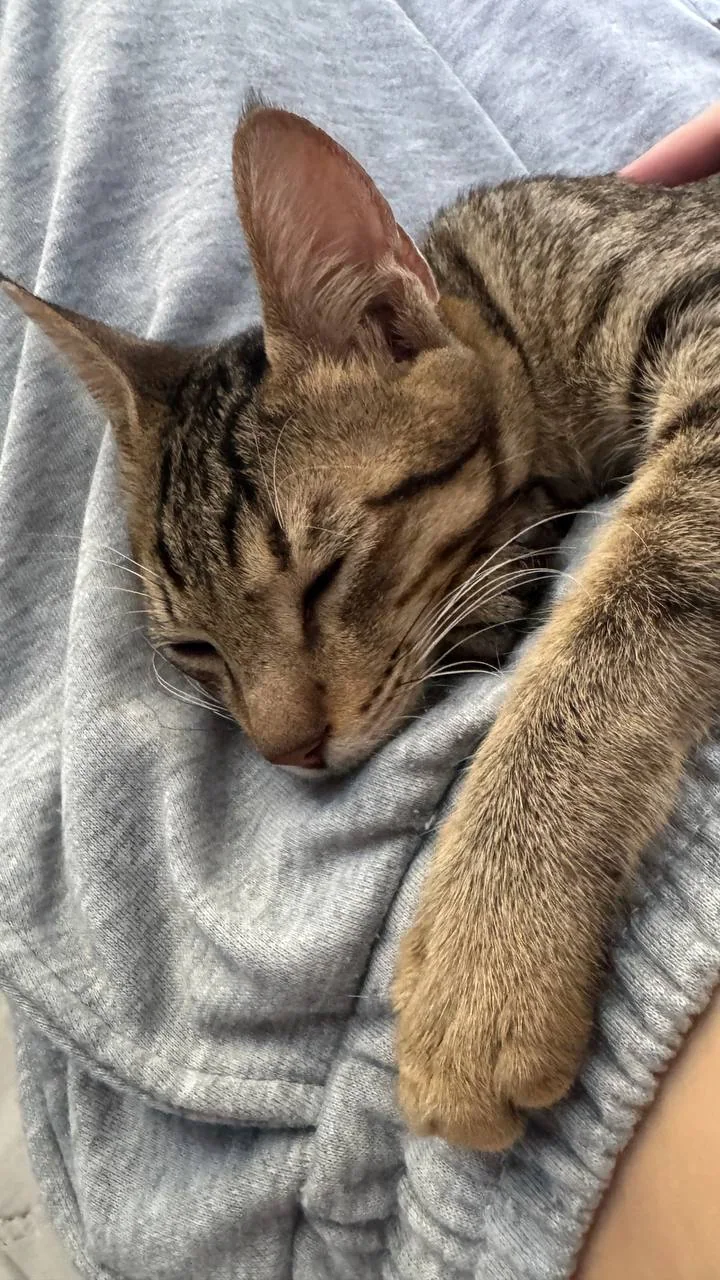
If hiding feels safer at that moment, the cat can hide.
The cat can come out later when ready.
Should you bring the cat for an introduction in advance?
I would not make one universal rule.
It is useful for the owner to visit beforehand:
- see the home;
- meet the sitter;
- ask questions;
- see where the cat can stay.
For the cat, a short introductory visit may simply mean an additional trip in the carrier and an additional unfamiliar place.
If the cat travels calmly, you can try it.
If the carrier is already a major source of stress, we would not consider a preliminary visit essential.
Does the cat need to meet other cats?
No.
If the home makes it possible to separate animals, the cat does not need to make new friends.
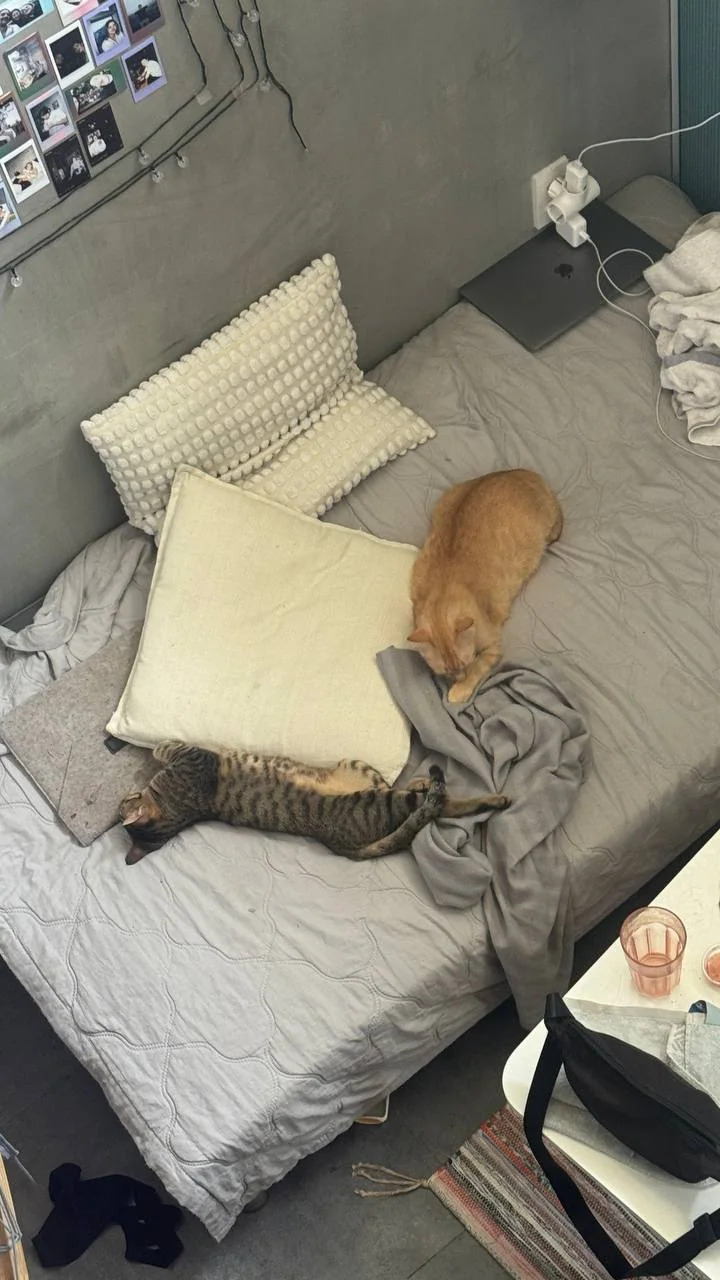
Two cats live in our home, but there are three separate rooms.
If the guest cat would prefer:
“This is my room, and I do not want to see anyone else,”
that arrangement is completely acceptable to us.
What if the cat eats poorly on the first day?
Appetite may change in a new place.
Tell the sitter in advance:
- what the cat’s normal appetite is like;
- whether the cat sometimes skips a meal;
- which food the cat prefers;
- any relevant health details.
The sitter should then look at the cat’s overall condition rather than one isolated meal and contact the owner when needed.
We will not pretend everything is perfect if we notice a meaningful change in behavior or wellbeing.
If the cat needs medication
Leave the clearest possible instructions:
- the name;
- the dose;
- the time;
- how you normally give it;
- whether it can be mixed with food;
- what to do if the cat refuses it.
Do not assume that another person will understand what this means:
“We usually manage to give it somehow.”
Photos and videos are particularly useful with cats
A message saying:
“The cat is still hiding a little”
can create many different pictures in your mind.
A video immediately shows whether the cat is sitting in a chosen safe place, grooming, eating, exploring the home, or already sleeping on the bed.
We therefore try to show the cat’s normal life with us rather than only a perfect promotional picture.
See the real conditions, photos, and videos from our cat boarding in Novi Sad →
The main principle when preparing a cat
Do not try to turn the cat into an animal that suddenly does not care about unfamiliar places.
It is more useful to preserve:
familiar food → familiar litter box and litter → familiar belongings → clear instructions → time to adapt without pressure.
Frequently asked questions
What should I bring for cat boarding?
Bring the normal food, medication, usual litter, and a few familiar belongings. You can also bring the cat’s own litter box.
Should I bring the cat’s own litter box?
It is not essential, but it can be useful if the cat is strongly attached to it and transporting it is practical.
What if the cat hides?
Give the cat time. Hiding at first in an unfamiliar place does not by itself mean that anything is going wrong.
Should the cat meet the sitter before boarding?
It is useful for the owner to meet the sitter. A separate short trip for the cat is not always necessary.
Does the cat need to meet other cats during boarding?
No, provided the home makes it possible to keep the animals separate.
Which vaccinations do you require?
We require a current core vaccine and rabies vaccine, both administered within the previous 12 months.