How to prepare your dog for their first boarding stay
If your dog is staying with unfamiliar people for the first time, you do not need to rebuild the dog’s entire life during the week before the trip.
The most useful preparation is the opposite: tell the sitter how your dog normally lives and bring the things that help preserve that routine.
A short pre-boarding checklist
Before the stay:
- meet the sitter;
- explain the normal walking and feeding routine;
- say whether the dog can stay alone;
- explain fears, medication, and behavioral details;
- bring the normal food and useful belongings;
- agree how often you will receive photos and videos.
Usually, nothing more complicated is required.
Pre-trip checklist
Check your dog's preparation
Checked: 0 of 9
Selections are stored only on this page and reset when it is reloaded.
Explain how your dog actually lives at home
Do not stop at “friendly and well behaved.” Describe ordinary daily life.
The sitter should know:
- how many walks the dog has each day;
- approximately when the walks happen;
- how long a normal walk lasts;
- when and how much the dog eats;
- where the dog sleeps;
- whether the dog is allowed on the sofa and bed;
- how long the dog can comfortably remain alone;
- how the dog behaves around other dogs;
- how the dog behaves around cats;
- what frightens the dog;
- whether the dog picks things up outdoors;
- whether the dog takes medication;
- any unusual habits that seem completely ordinary to you now.
These details determine how familiar daily life can remain in the new place.
Do not change the food specifically for the trip
Boarding already introduces a new person, home, smells, and walking routes.
Unless there is a separate reason to change the diet, we would not add unfamiliar food as well.
Bring the dog’s normal food and explain:
- the portion size;
- the number of meals;
- approximate meal times;
- whether treats are allowed;
- any foods the dog cannot have.
Bring familiar belongings
You do not need to pack an entire apartment.
Useful things often include:
- food;
- bowls, if they matter to the dog;
- a lead;
- a collar or harness;
- medication;
- a favorite toy;
- a bed, if the dog actually sleeps on it;
- a towel or other items normally used after walks.
If your dog never uses a dog bed at home and always sleeps on the sofa, buying a special “boarding bed” is unlikely to help much.
Meet the sitter in advance
A meeting before the first stay can be very useful.
The dog can:
- see the person;
- smell and explore the home;
- begin to settle;
- meet animals that already live there;
- take a short walk together.
The owner can see where the dog will actually live instead of trying to imagine it through messages.
Our introduction before a first stay is free and normally takes about half an hour.
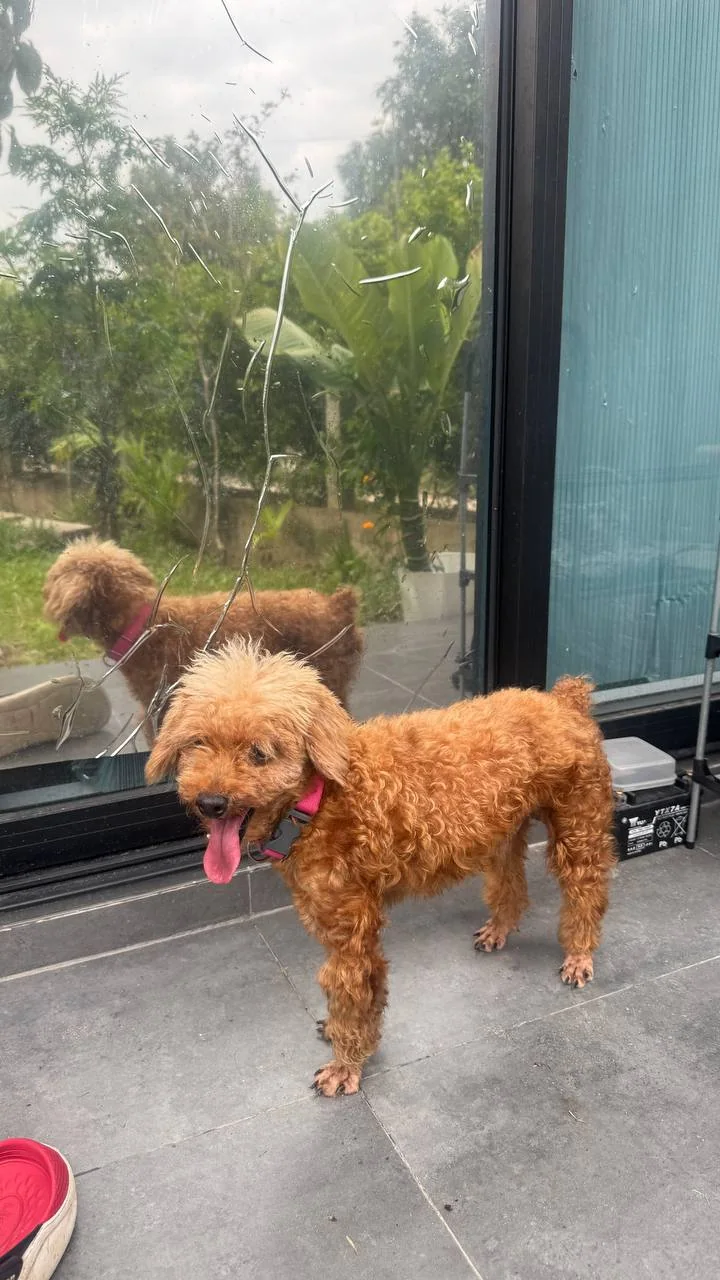
If the dog has never stayed with someone else, try a short visit
Even after a thirty-minute meeting, it may be difficult to know how a dog will react when the owner actually leaves.
You can begin with a stay of a few hours.
This can help you observe whether the dog:
- settles after the owner leaves;
- can rest;
- is comfortable in the home;
- behaves safely around other animals;
- seems suited to this type of care.
Our trial stay of a few hours costs 1,000 RSD.
Check available dates
Choose approximate dates to see availability and an estimated price. We’ll confirm everything in Telegram.
First choose an arrival date.
How are boarding days calculated?
We charge by 24-hour periods starting from the check-in time. For example, if your pet arrives on September 8 at 9:00 AM and is picked up on September 10 at 9:00 AM, that is 2 boarding days. If pick-up is later than the original check-in time, the next billable period begins. We confirm the exact check-in and pick-up times before the stay.
Do not try to retrain the dog specifically for boarding
If a dog has slept on the bed all its life, the week before a trip is a strange time to begin teaching it to sleep on the floor.
If the dog normally has three walks, try to preserve three walks.
If the dog eats in the morning and evening, keep that schedule.
Boarding is usually easier when only the changes that are genuinely unavoidable are introduced.
If your dog cannot stay alone, say so clearly
This is one of the most important details.
Do not write:
“The dog sometimes misses us a little.”
If the dog actually:
- howls;
- barks;
- scratches the door;
- panics;
- damages things;
- has never stayed alone at all,
then the sitter needs to know before accepting the booking.
We can sometimes arrange a stay so that one of us remains at home, but this must be discussed in advance.
Explain how your dog walks
“Walks normally” can mean many different things.
Explain:
- whether the dog pulls on the lead;
- whether the dog picks up food or objects;
- whether it is safe to approach other dogs;
- whether the dog fears cars, bicycles, children, or loud sounds;
- whether there is a familiar type of route;
- whether the dog normally goes off lead, although the sitter may follow more cautious safety rules.
If you use a specific command to stop unwanted behavior, share that as well.
What happens during the first hours after the owner leaves?
Not every dog lies down and sleeps within five minutes.
One dog may walk around looking for the owner.
Another may sit by the door.
A dog may relax noticeably after a walk.
Another may begin exploring the new place almost immediately.
Do not treat the first hour as an exam:
“If the dog does not relax immediately, boarding cannot work.”
Watch how the dog gradually adapts.
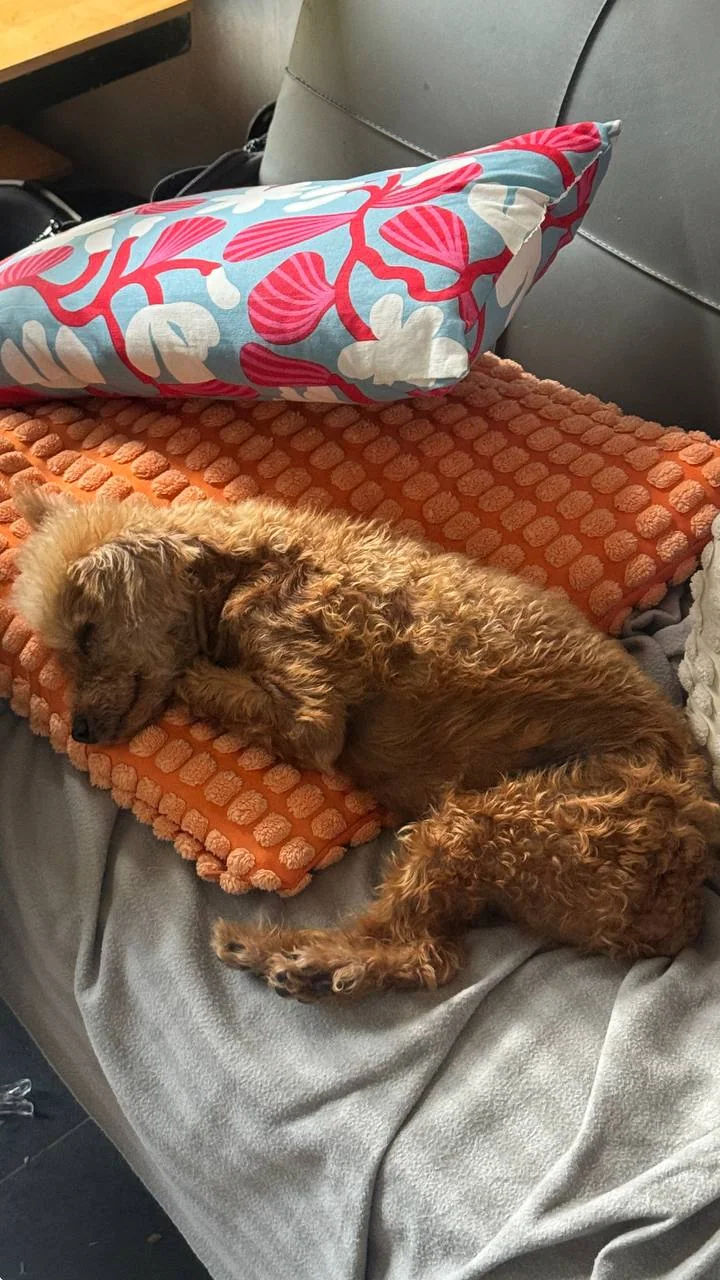
Agree on photos and videos
For us, a message saying:
“Everything is fine”
is much less informative than seeing the dog with our own eyes.
We normally send photos and videos of what is actually happening:
- walks;
- meals;
- sleep;
- play;
- lying on the sofa;
- interaction with our cats;
- ordinary daily life.
If updates are important to you, agree on them before the trip.
See real photos, videos, and details of our dog boarding in Novi Sad →
The most important preparation for a first stay
Do not try to prepare an “ideal dog.”
It is much more useful to:
describe the dog’s normal life honestly → preserve the normal routine → meet in advance → leave clear instructions.
Frequently asked questions
Do we need a trial boarding stay?
No. But if your dog has never stayed with other people without you, a few trial hours can provide useful information.
Should I bring my dog’s own bed?
Bring it if your dog genuinely sleeps on it. If your dog normally prefers the sofa or your bed, a separate dog bed is not essential.
Should I change the food before boarding?
Not without a separate reason. Keeping the normal food avoids adding another change to an already unfamiliar situation.
What should I bring for dog boarding?
Bring the normal food, walking equipment, medication, and familiar belongings the dog genuinely uses at home.
What must I tell the sitter?
Explain the routine, walks, food, response to being alone and to other animals, medication, fears, and any relevant behavior.
What if my dog has never stayed with someone else?
Meet the sitter in advance and, if useful, begin by leaving the dog for only a few hours.