Make Your Competitors Suffer
B2B SEO Case Study: 620 Inquiries, 41 Customers & 60% ROI
A firsthand account of technical SEO, niche research, content structure, and measurement for a Russian B2B manufacturer.
Measured business outcomes
Results at a glance
620 website inquiries progressed to 168 price negotiations, 41 new customers, and 47 closed deals.
- Inquiries
- 620
- Price negotiations
- 168
- New customers
- 41
- Closed deals
- 47
- Realized revenue
- ₽1.218M
- Realized net profit
- ₽816k
- Realized ROI
- 60%
These are realized results from new website inquiries. The separate 380% figure later in the case is a projection, not a realized outcome.
This real B2B SEO case follows the work for Rentgen, a Russian manufacturer of rubber and plastic products: the starting problem, the changes and experiments, the search-visibility evidence, and the measured inquiry-to-revenue results.
Updated September 2026
As a marketing professional, I’m always on the lookout for a new challenge to push my skills to the limit. And when I decided to tackle the world of website SEO, I knew I was in for an exciting ride. In this independent case study, I’ll be sharing with you how I helped a Russian B2B client achieve significant success through SEO promotion. And even show you REAL figures! I could not find a single similar case in the B2B sphere with concrete ROI and revenue growth numbers from SEO improvements.
Over the course of almost two years, I worked closely with the client to optimize their website, improve their search engine rankings, and increase their online visibility. In this article, I’ll provide a detailed analysis of the SEO strategies I implemented, as well as the incredible revenue growth that resulted. So if you’re ready to learn how to enhance your B2B business’s online presence and boost revenue, then keep reading. This case study is a must-read for anyone interested in unleashing the power of SEO for B2B businesses!
Project Overview
A Little Story About My Client’s Company
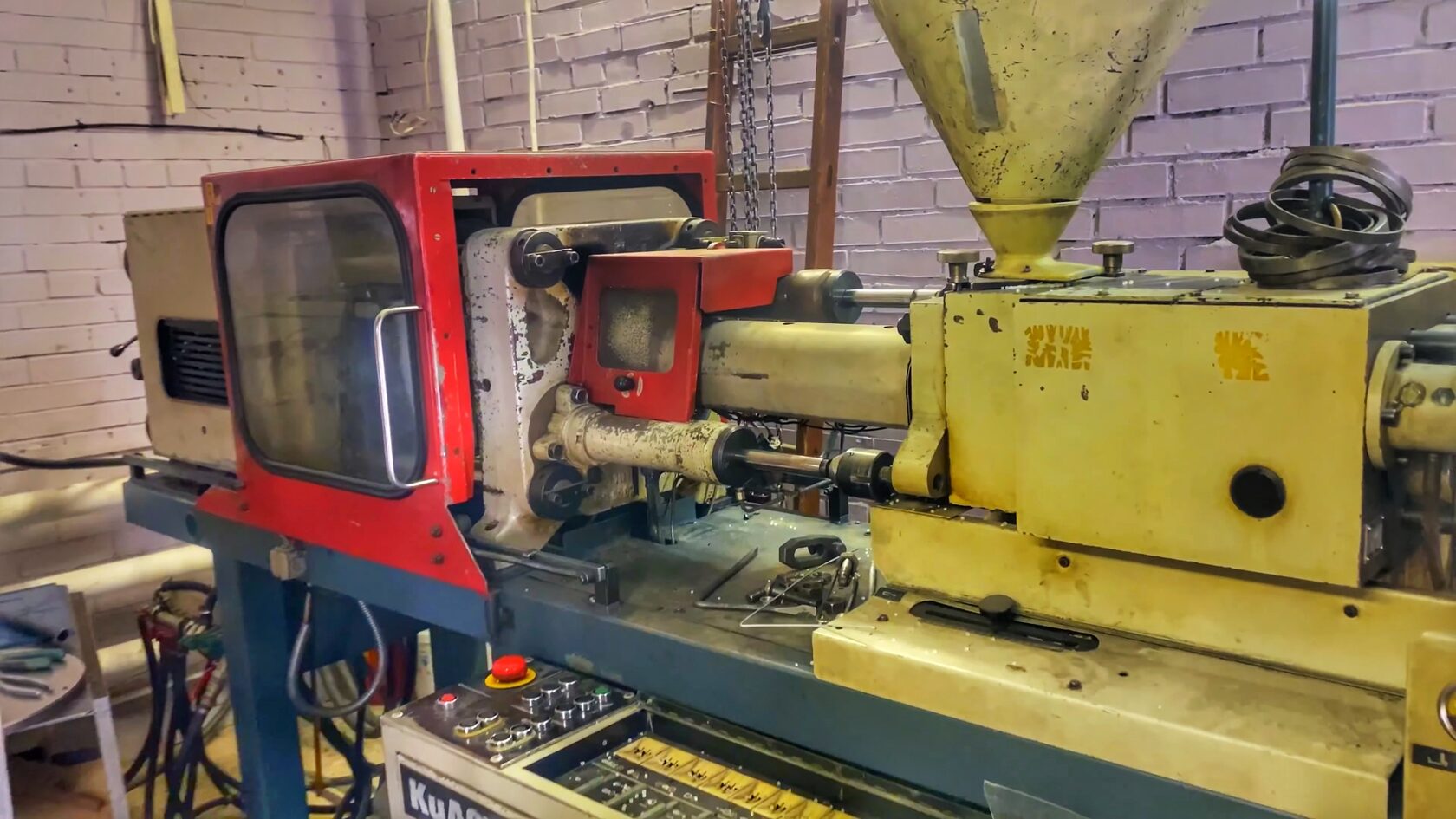
My client is a company called “Rentgen”, an old manufacturer of rubber and plastic products mostly in the B2B sphere. We have been working together for almost two years now, and I have completed several projects for “Rentgen” as well as other projects for the company’s owner. I will write more articles about these interesting projects later.
Rentgen has a fascinating backstory. In the ’90s, the factory was part of the huge diamond manufacturer “Alrosa,” which is still operating to this day. The main purpose of Rentgen was to make rubber and plastic products for the production equipment, machines, etc., needed by Alrosa. However, in 1995, Rentgen gained its independence and became a joint-stock company with many stakeholders. In 2000, after the death of a competent and outstanding CEO of Rentgen, hard times came for the company. By 2019, it was in serious debt and close to bankruptcy. At that time, Denis Holodenko, a young and enterprising 21-year-old man, agreed to buy out the unprofitable company. After a couple of years, he made Rentgen profitable, and he still owns and manages the company today. This is an article written by Denis, where he shares his story of success and tips on managing an unprofitable company.
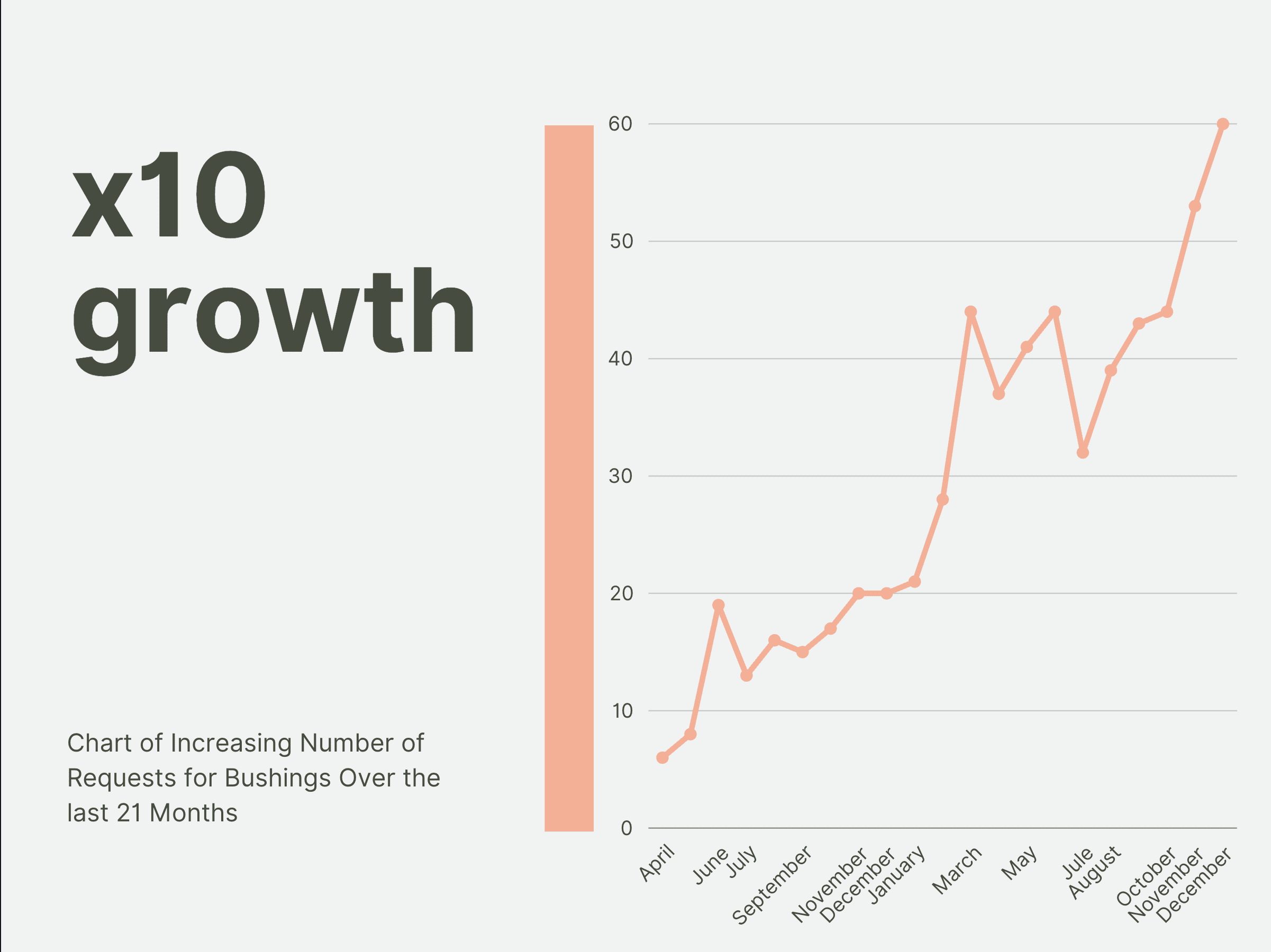
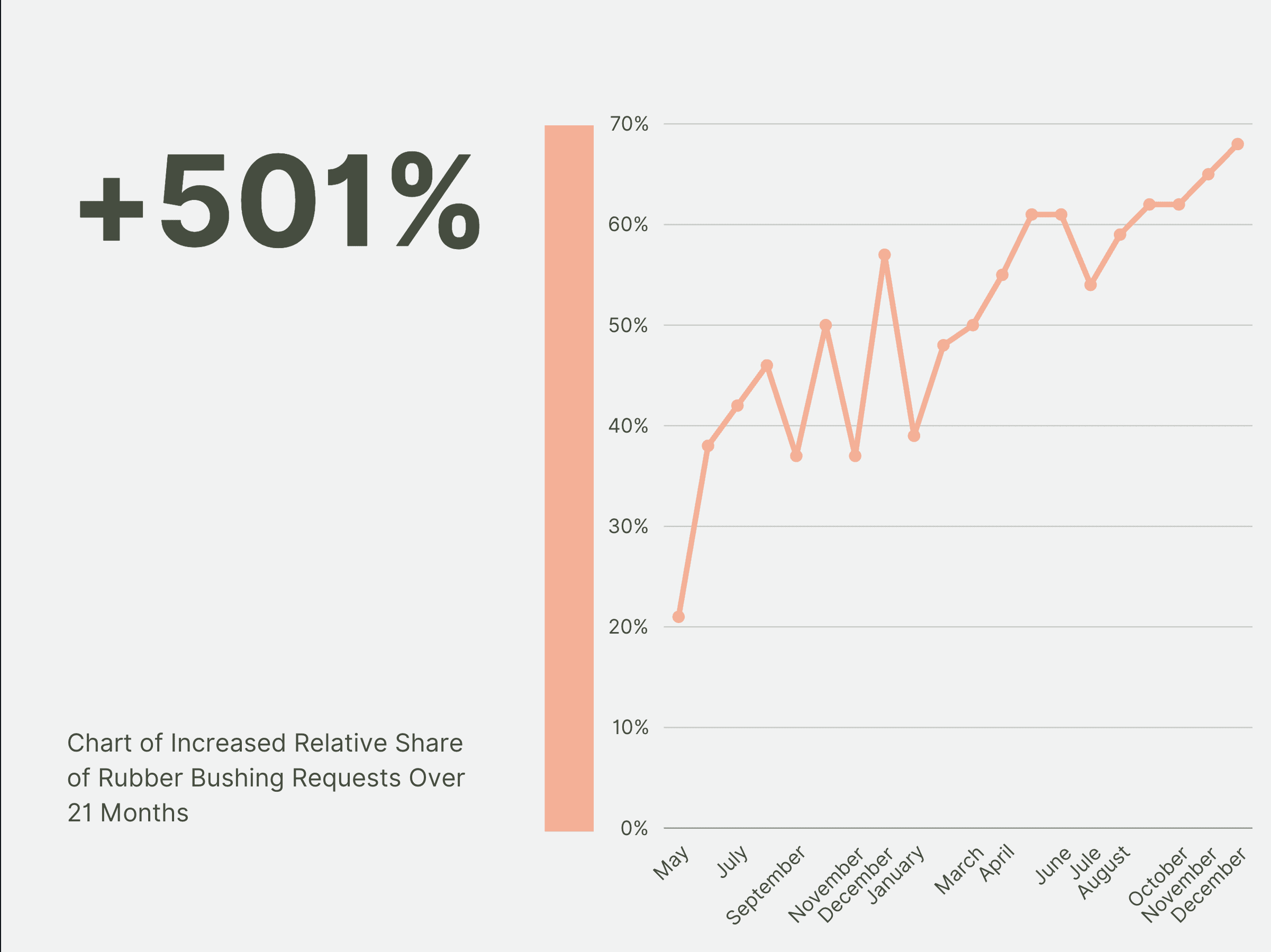
The goal this time was straightforward: Rentgen aimed to explore a new profitable and easy-to-sell niche - manufacturing and selling rubber bushings - and required more leads for this area. Also the company started to lose online visibility of the website by all pages! And If you have less traffic, you have less new clients. And old clients have a special quality— they reduce with time.
What Are Rubber Bushings?
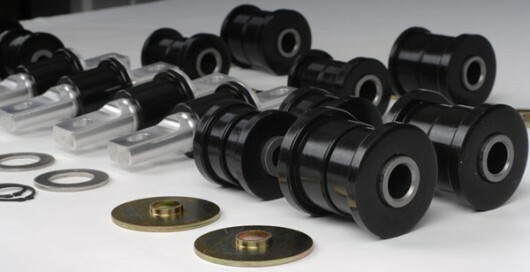
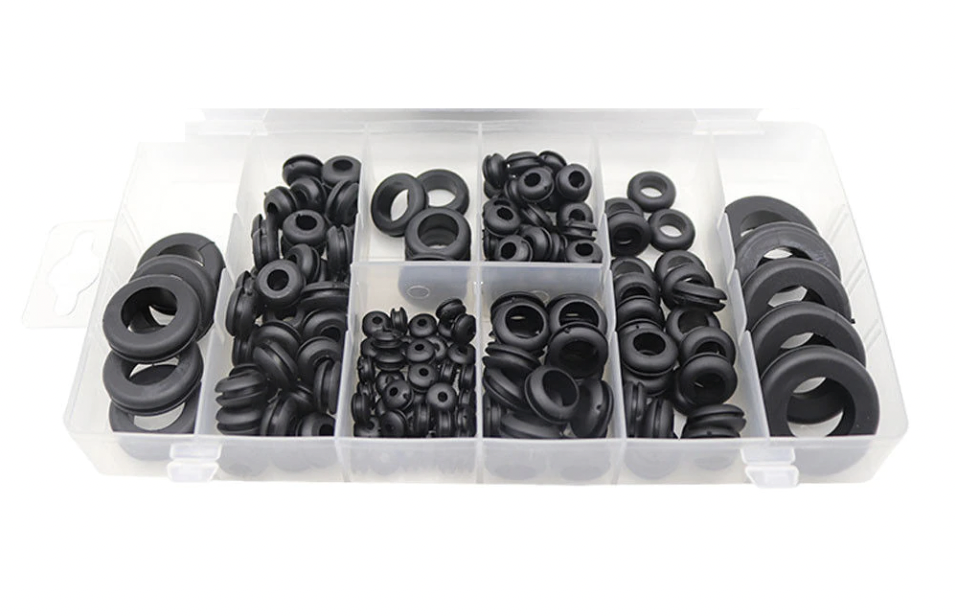
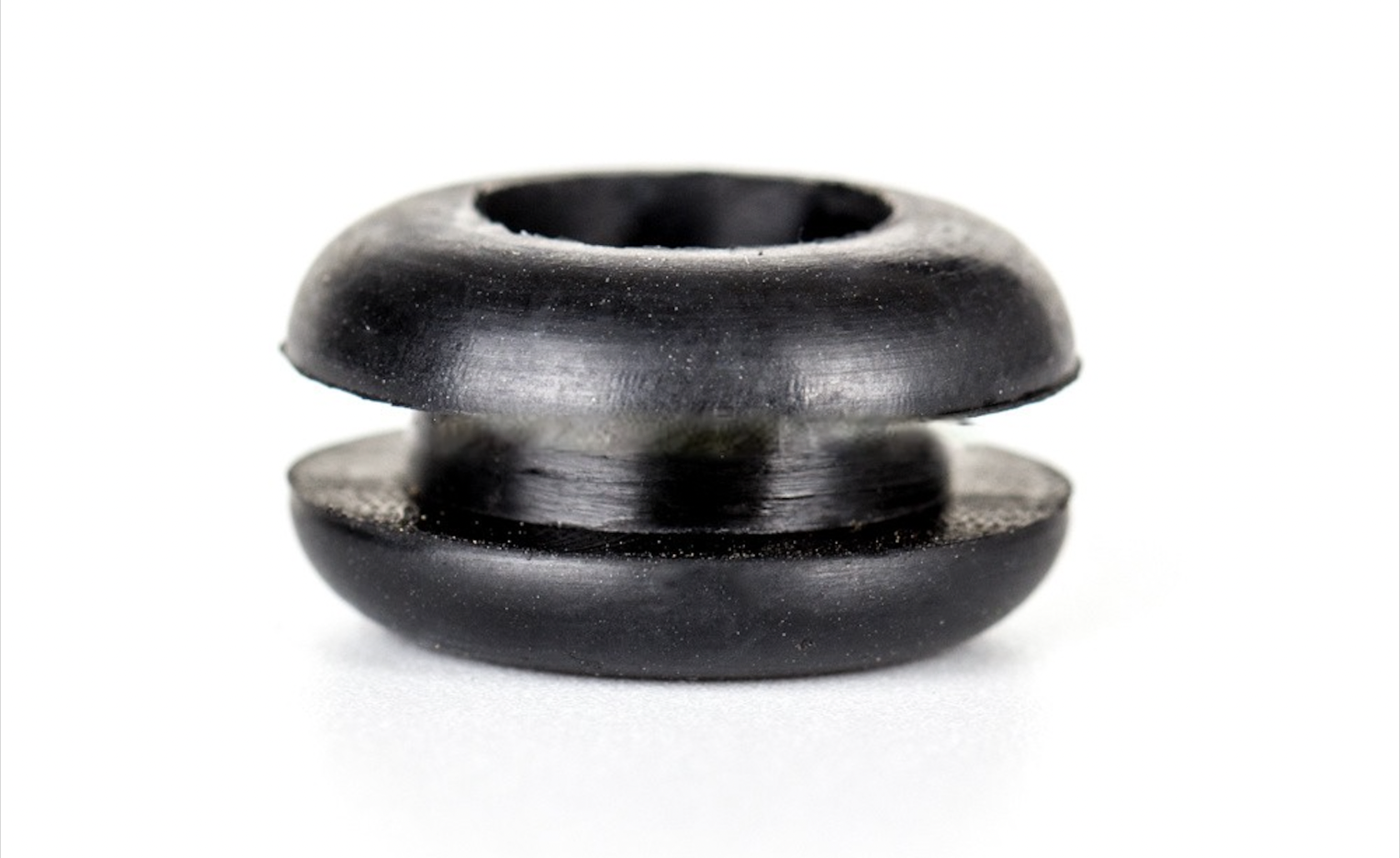
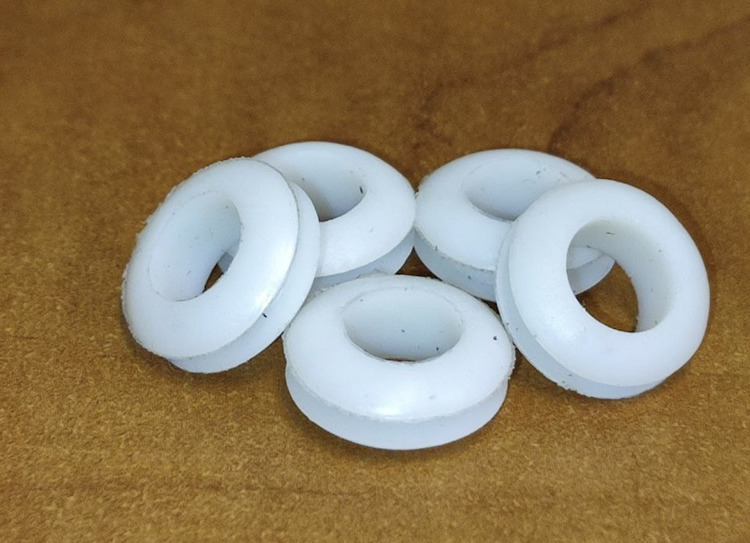
Rubber bushings are used to absorb shock and reduce vibration in mechanical systems. They are commonly used in applications where two metal components meet and need to move against each other, such as suspension systems, steering linkages, and engine mounts.
The advantages of this product are:
-
There is a big enough and stable market for them, as many industries and B2B businesses require this little rubber product.
-
They are easy to sell. If you have certain sized bushings, there will be a deal!
-
You do not need to produce ALL different bushings. You only need a few, and you need to know where you can buy the others. So if you have a list of different manufacturers, you can resell their bushings.
Therefore, the goal was simple: generate more leads from SEO and fix problems which caused a loss of positions of other pages. Rentgen wanted to generate leads only using SEO and not direct advertising. It was a difficult yet interesting task, and I took it up!
Chapter 1: Recalling Previous Experience
The goal is clear, but how do we achieve it? This project is my first venture into website SEO, but I do have prior experience with YouTube SEO. I created my own channel for a local martial arts club in Saint-Petersburg and also managed a channel for a custom broker who is also my client. Over the past three years, I have learned how to create videos targeting specific keywords that users search for. However, website SEO was a new challenge for me. I needed to adapt my skills and knowledge to this different platform.
So I start thinking. Yeah, SEO for YouTube have quite similar rules to make it effective:
-
Think about your auditory: what they want to know, what keywords they write down in the sidebar of Youtube to find videos?
-
Write down these keywords yourself – but in incognito mode, thats important, because you need to see the real picture without Google suggesting you some videos based on data it has on you.
-
Think what you can do better than videos of your competitors for these keyword.
Yeah, that’s all, what you need to do.
With SEO for websites these steps are the same, but you need to keep in mind far more microsteps also: because it is necessary to take into account much more various factors.
”We Have a Website, But…”
The thing is – of course, if you want to make really great results, you need full control of your website, that’s why for our goals it was impossible just leaning on rentgen.pro made on really (REALLY) old CMS without possibilities to implement all my my current and future SEO-ideas.
So, after few weeks of weighing all the pros and cons, I made a strategy:
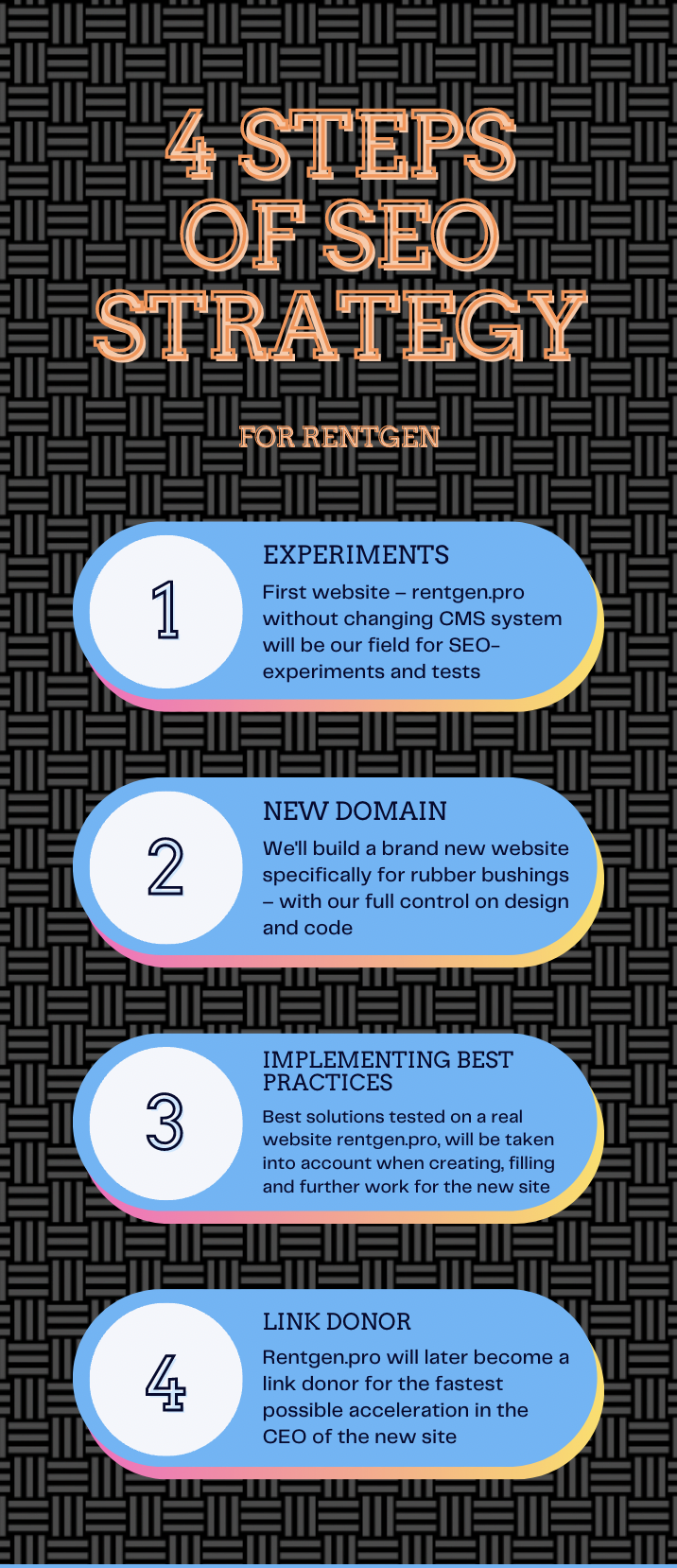
We discussed in detail the strategy that I came up with. Then I prescribed all the works that need to be included in the contract in order to achieve the desired goals, signed it and I started working.
Competitors and Niche
Just make your website better and provide more valuable content than your competitors – and you will conquer the web!
Because this website is a place where we show what do we have, which products we are producing and trying to sell it, I needed to understand weaknesses of my competitors: WHAT CAN I MAKE BETTER THAN THEY DID??? How can I provide this understanding that we have EXACTLY what potential customers need. And so they would not go from our website to another — because they would be satisfied by our.
From my point of view, competition in almost any B2B market is weaker all in all compared to B2C market. So, I collected my competitors and l studied their websites to understand what they are - and what seems inconvenient, unnecessary to me in them, and in general, so that I could do better.
Main issues were:
-
With one exception (littek.ru) — it was clear that the sites were NOT created by SEO specialists. Also that they have a lot of simple mistakes in SEO-structure of site and pages at this site.
-
Rubber bushings were divided into categories in different ways on each site. Which was amazing for me! How does each production define categories according to its own criteria? And then how can the user deal with it?
-
Not only categories, but sizes for bushings were also made differently and be written differently on different websites! How could I provide best content in this niche for clients if there is even no standarts in the niche?
-
Because of low-traffic in these niche, for some keywords Google and Yandex give you wrong pages of products when there is right one. google gave the same results for completely different queries. for example, sleeve and bushing 10-10 10-10,6, and bushing 10-10-6 it is completely different bushes, and I noticed that neither Google or Yandex couldn’t give exactly what people asked.
Based on this info which I explored, I started generating ideas to make rentgen.pro better. Better than the competition!
Chapter 2: Let's Redesign What We Can and Improve Performance
First of all, since rubber bushings are now our main goal for SEO promotion and all emphasis should be placed on this category, it was necessary to redesign the logic of the site and all pages involved in this to strengthen the category of rubber bushings. So, let’s have a look on changes which were needed to achieve this.
Design and Common Points
-
Text was brown and hardly readable – I changed that. Also, let’s admit it - brown is one of the worst colors for any website, especially for text.
-
Brown-White-Black style changed on Black-White. Cause it was just bad UI. Of course, I didn’t have an option to make bigger changes (still this is CMS from 90’s)… Only Logo remains the same brown patterns.
-
Removed LiveChat, because it provided NO convertions at all for the last 6 months. I was really surprised when I realized that a tool that claims a SIGNIFICANT increase in the number of conversions on the site does not give ANY!
-
Repaired the Search for website, cause even though it was there it didn’t work.
-
Compressed the pictures for faster loading
-
Improved the speed insight indicators as much as I could (you can optimize better, but this is already the internal platform that you can’t reach – they don’t even support the modern compression format WebP, I asked)
-
Simplified the feedback form (the button and the submit a request window) – since some fields of the form were mandatory and I could not change it (this is how the CMS was created), I removed at least what could be removed. There is nothing worse for the conversion rate of the site than a thousand fields in the feedback form!
-
Optimized titles, H1-H4 etc. Standart SEO-routine
Main Page
-
Click Map and Scroll Map showed me that almost all text on the main page is scrolled by the user. At least 50% of info on the page had to go away or be rewrited. I did that as well as repaired all links which didnt work.
-
Also for the main page I add categories area for better UX-experience. Of course, “bushings” category was placed first in the list.
-
All broken links were repaired. Also I added links for pictures because from previous projects I know that sometimes the user wants to click on the image and is frustrated when the design does not provide for the transition to the desired category by clicking on the image.
-
Added a lot more pictures of various bushings to the carousel under the header of the site – yeah, I’m using every tool which can help say to user WE HAVE BUSHINGS, WE PRODUCE THEM etc.
-
Added YouTube-link for the basement of the site. Yeah, around one year ago I helped Denis to make a few videos for the channel just to create more trust among potential consumers in comparison with competitors.
-
I put “rubber bushings” straight to main menu for the fastest set of traffic by this category. This is part of the work of [inner linking] the site
-
Based on unemportancy and low-traffic of page “for shareholders” I removed it from main menu.
-
I discussed 2 phone numbers in the heading and leave only one there – for the convenience of user and increasing conversion.
Category Page
-
As well as I did it for the main page, I added convertional text for the category page: for customer not leaving our company, because MOST LIKELY WE HAVE EXACTLY WHAT YOU NEED.
-
Optimized titles, H1-H4 etc. And remove some useless for SEO text paragraphs.
-
Renamed all category links. /vlulki-1 became /rezinovye-vtulki (rezynovye=rubber, vtulki=bushings) to fully enter the main keyword, which will need to be promoted.
Product Page
-
For every page I added convertional text. Short version: “Couldn’t find a bushing you need? Just send us a message via email, we definitely have exactly what you are looking for!”
-
Repaired the “Search” bar for the website, cause even though it was there it didn’t work.
-
I made cross-linking from one product with similar inner diameter to others with the same inner diameter. It makes user experience better, also performance of website (page depth) is slightly better.
What Happened After the Changes
First 2 weeks
First 1 month
First 2 months
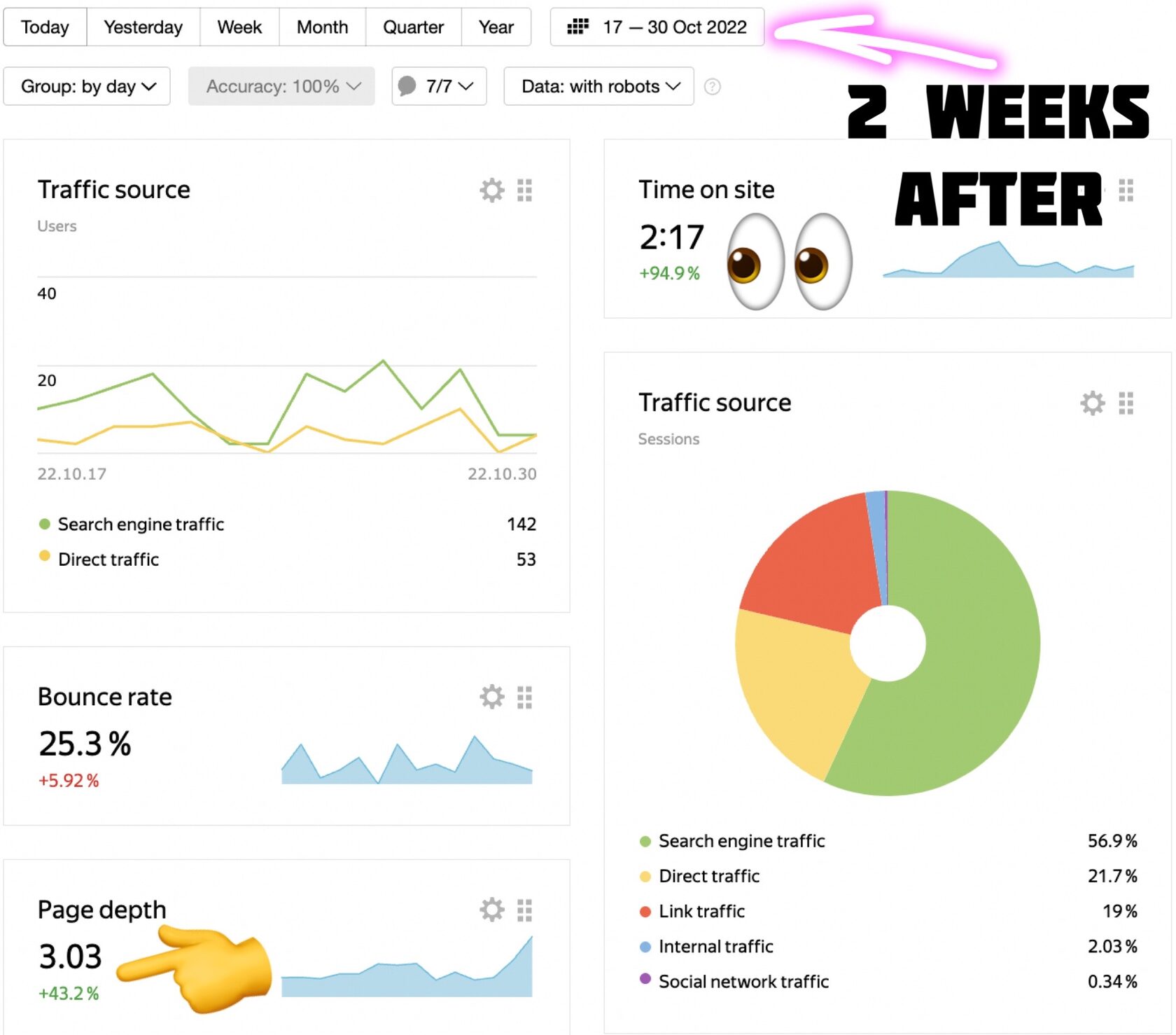
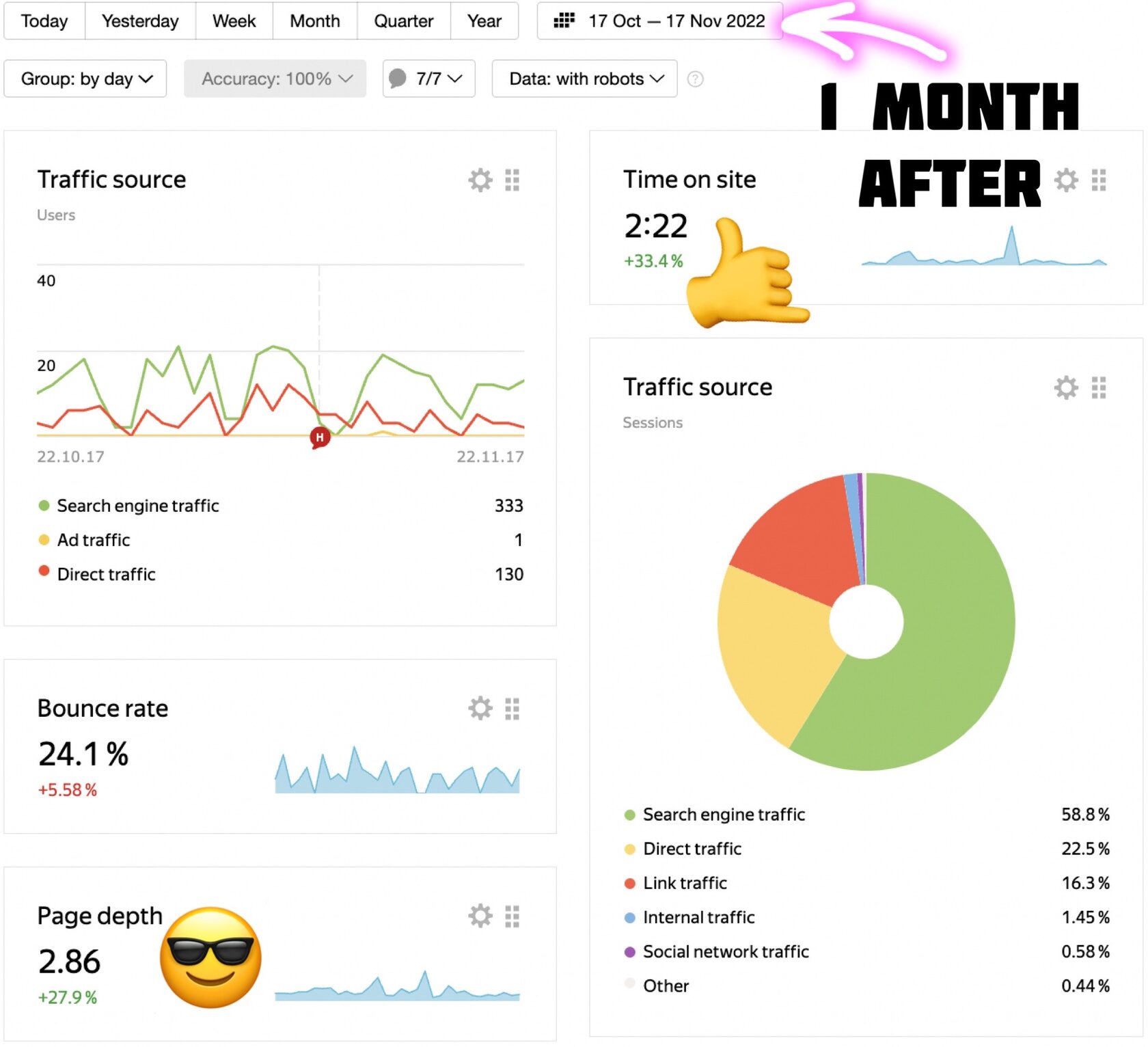
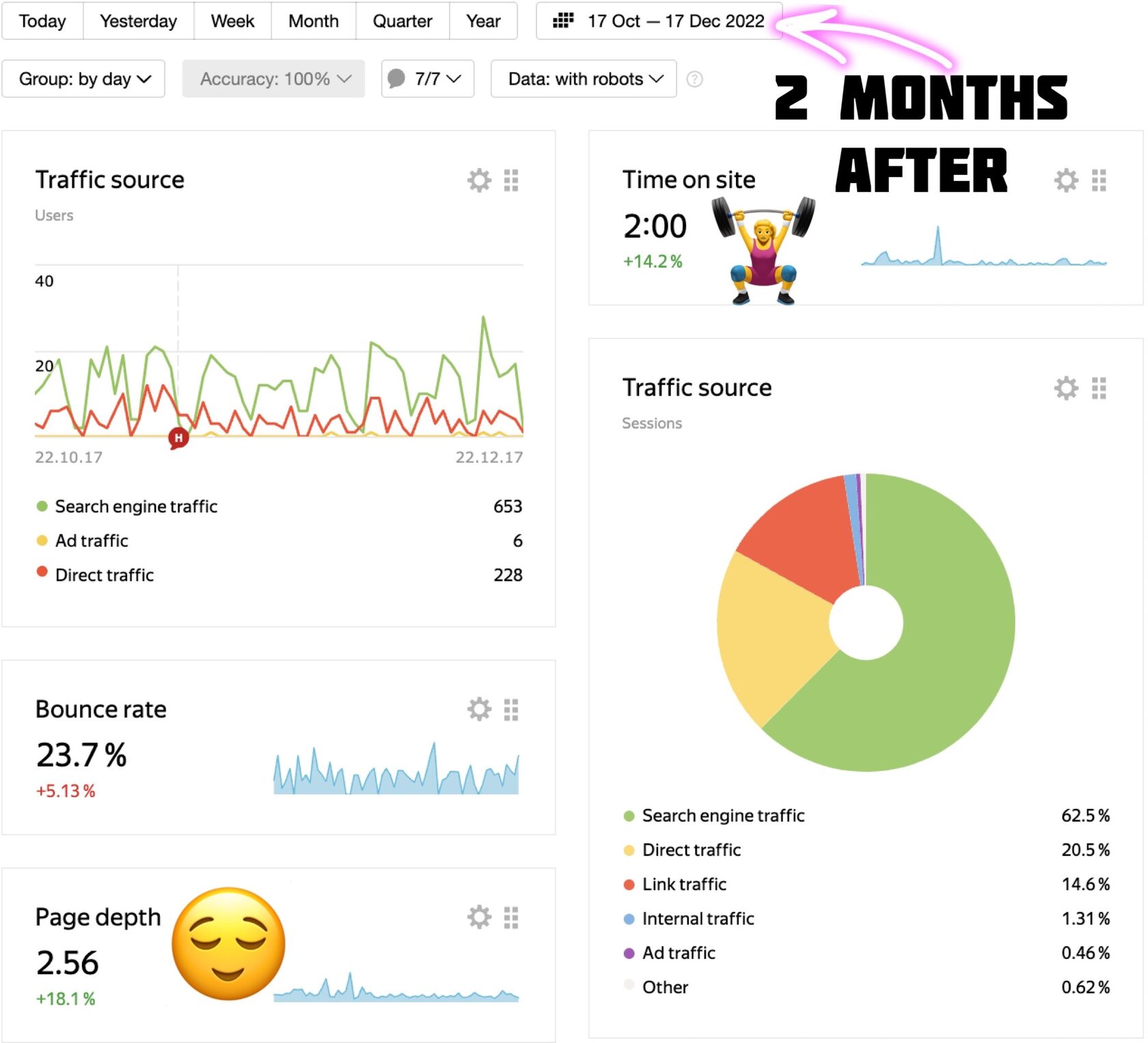
Implementations definitely improved Google’s and Yandex attitude to the site, as well as usability for the user.
As you now can see, it’s crucially substantial to make SEO only using holistic, comprehensive approach! You’ll see this later in the article also.
Chapter 3: Let's Dig Deeper and Start the Experimental Stage
If you only do what gurus tell everyone to do, you will get average results. First, try to find what nobody else sees.
With a coordinated strategy, I started the most creative and interesting stage. I had to figure out what I could potentially do to beat our competitors, aka experiments stage.
Of course, these ideas didn’t come in my head in a moment. Like every continuous and long run marketing campaign needs from me to think way more than just “make something”. But I like thinking, and despite the fact that all these ideas came to my mind gradually, for simplicity I will make a list and write down the results of each of them (this list will be updated as we continue to work).
Technique 1: Make More Pages, Not Fewer
Despite the fact, that every one of specialists suggest NOT to make more articles or just pages for better SEO, I decided, that it might work in our situation.
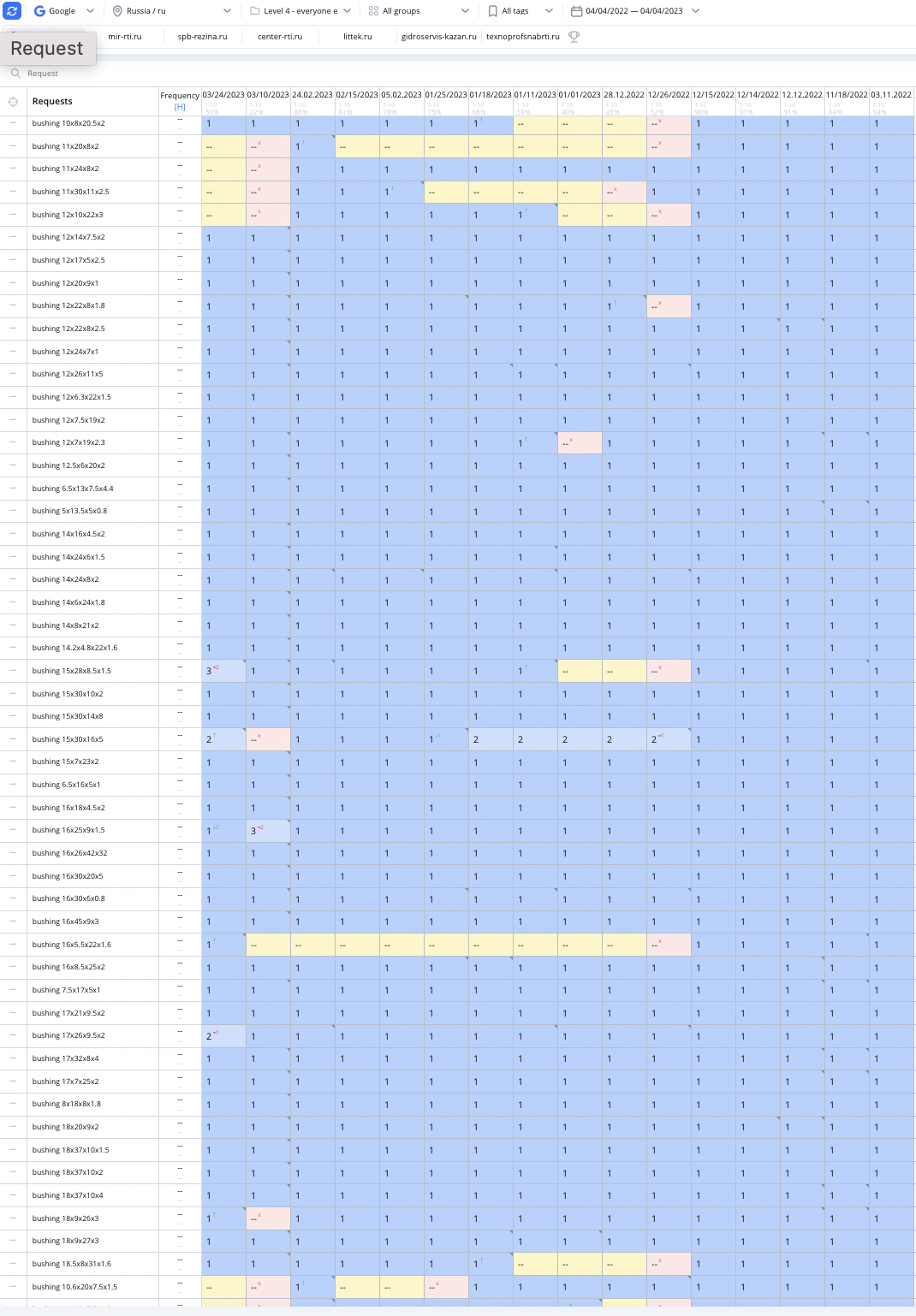
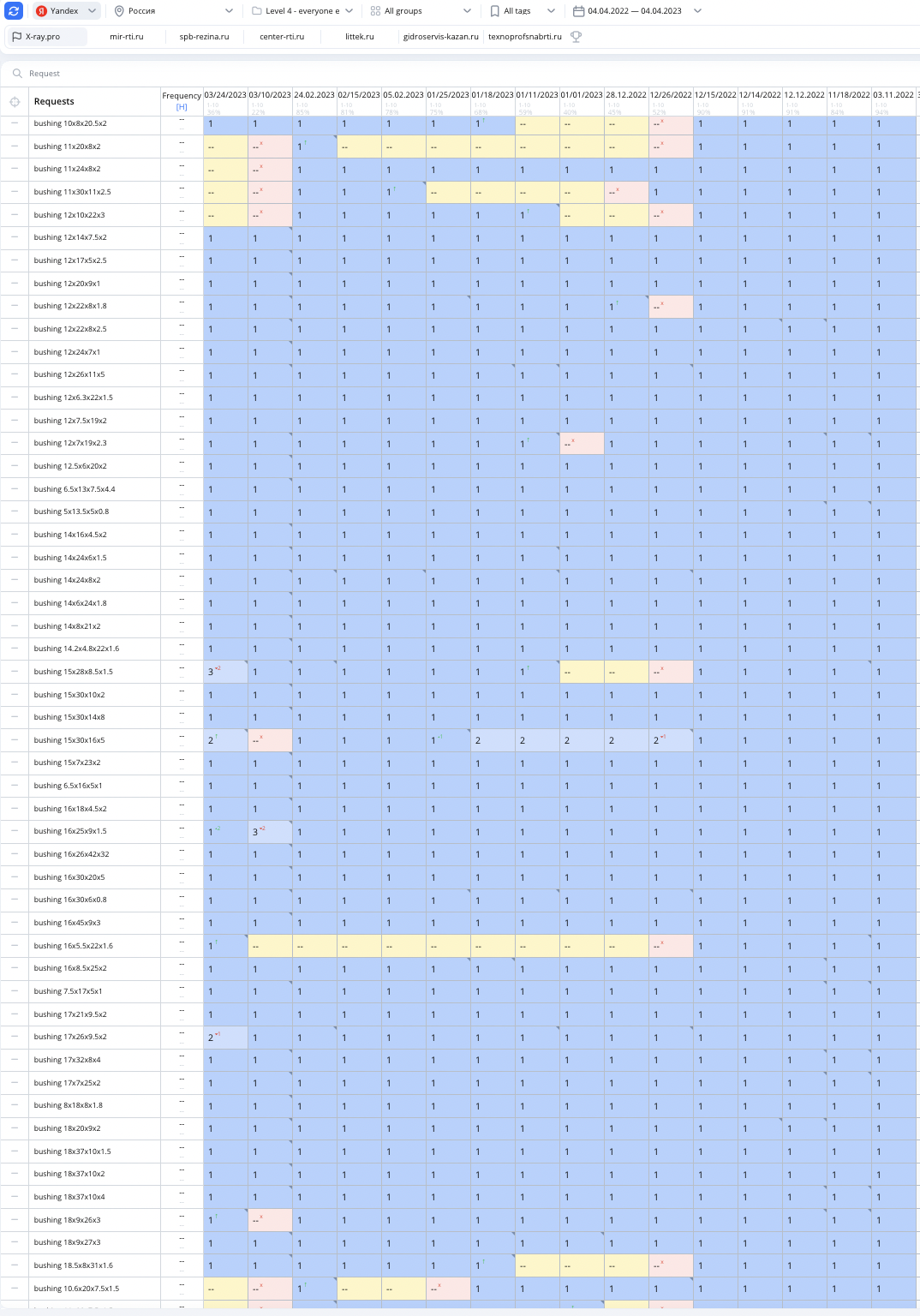
Result: for almost thousand low traffic keywords we have 1 places in search results! Guess, what will be about the conversion not only in click to our website, but even in selling???
And so far I see all the signs that it’s working.
Almost all the new pages that I have created on the website are on the first page of the search results
Examples of these pages
Google Search
Yandex Search
Of course, not with every product it goes so smoothly. Sometimes there are competitors :)
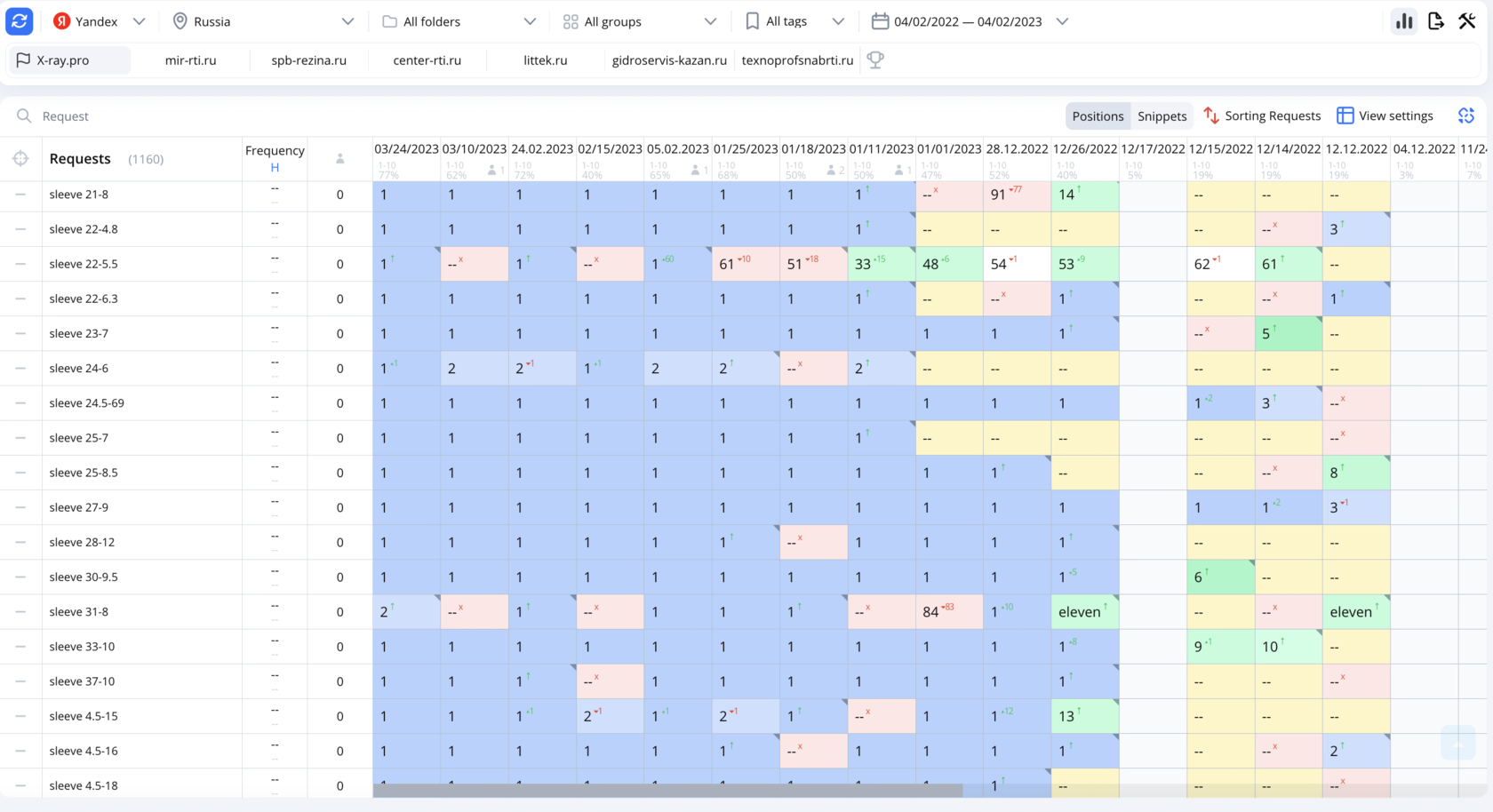
Technique 2: Repair What Is Broken
Yeah, search engines are getting smarter and smarter each year, but it’s still vital to make SEO-optimization of each page of your site right! Step by step using this spreadsheets.
Result: I gave you proofs in the previously – all these things makes website performance better!
Technique 3: Test Visible Prices
Yeah, for now, I have to admit — that’s not the best technique, but prices, even not proper ones WORK and increase the conversion rate of the site!
Result: client’s employees sad that they receive more leads, but some potential customers became very indignant because of the difference between the real price and the one on the site. It’s time to develop a new script for communicating with such clients and explain that the marketer is to blame for everything :)
Technique 4: Cross-Link Similar Products
Bushings with one sized diameter should be crossed-linked — every one page with every others with same diameter. Yeah, most likely you have a size filter on the category page, but that’s not enough!
Results: good enough as I see.
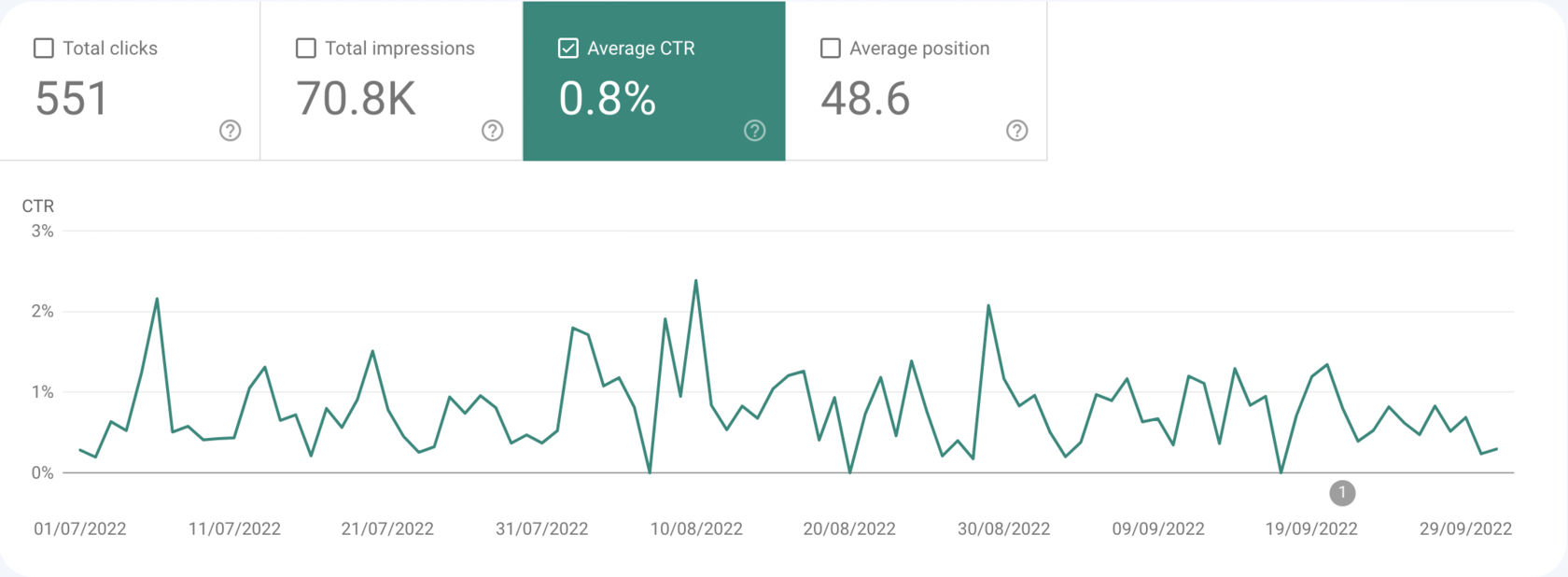
Technique 5: Test Titles for Better CTR
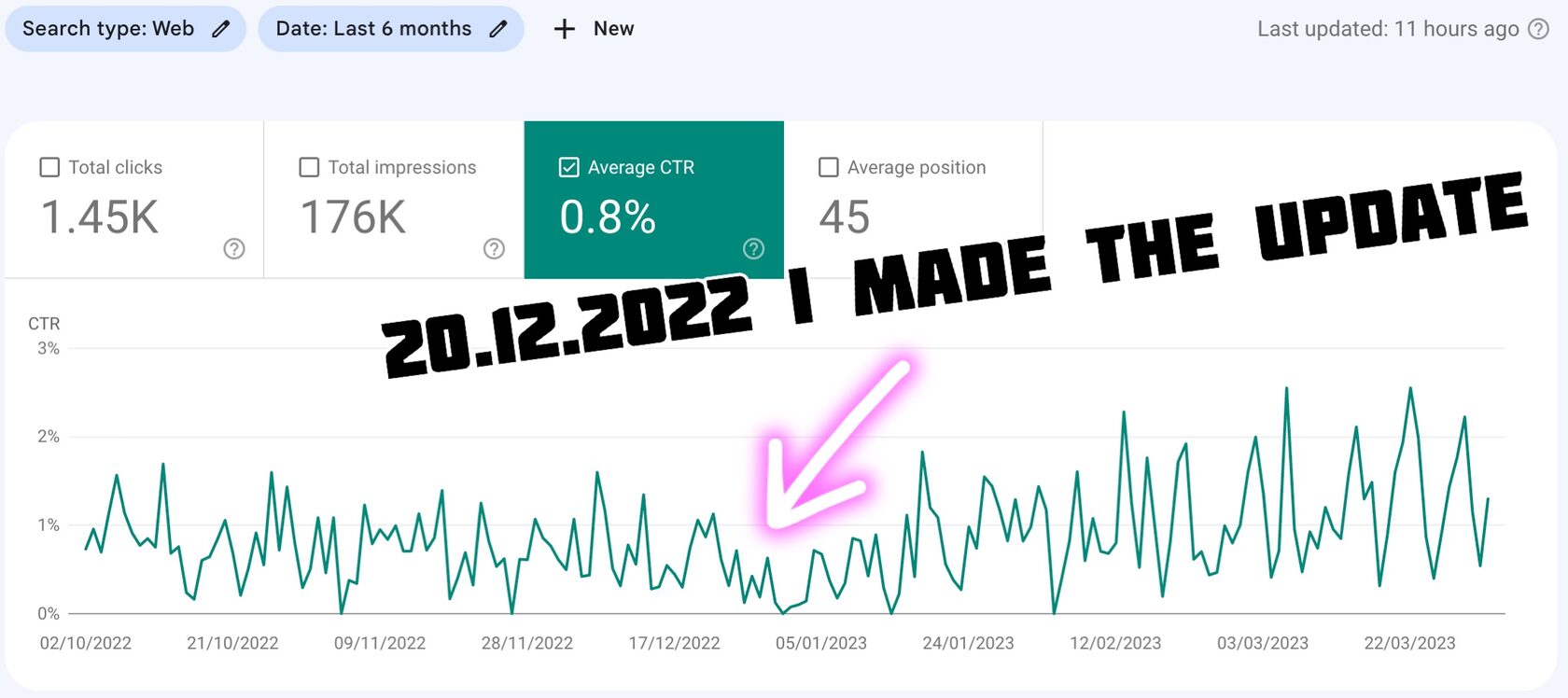
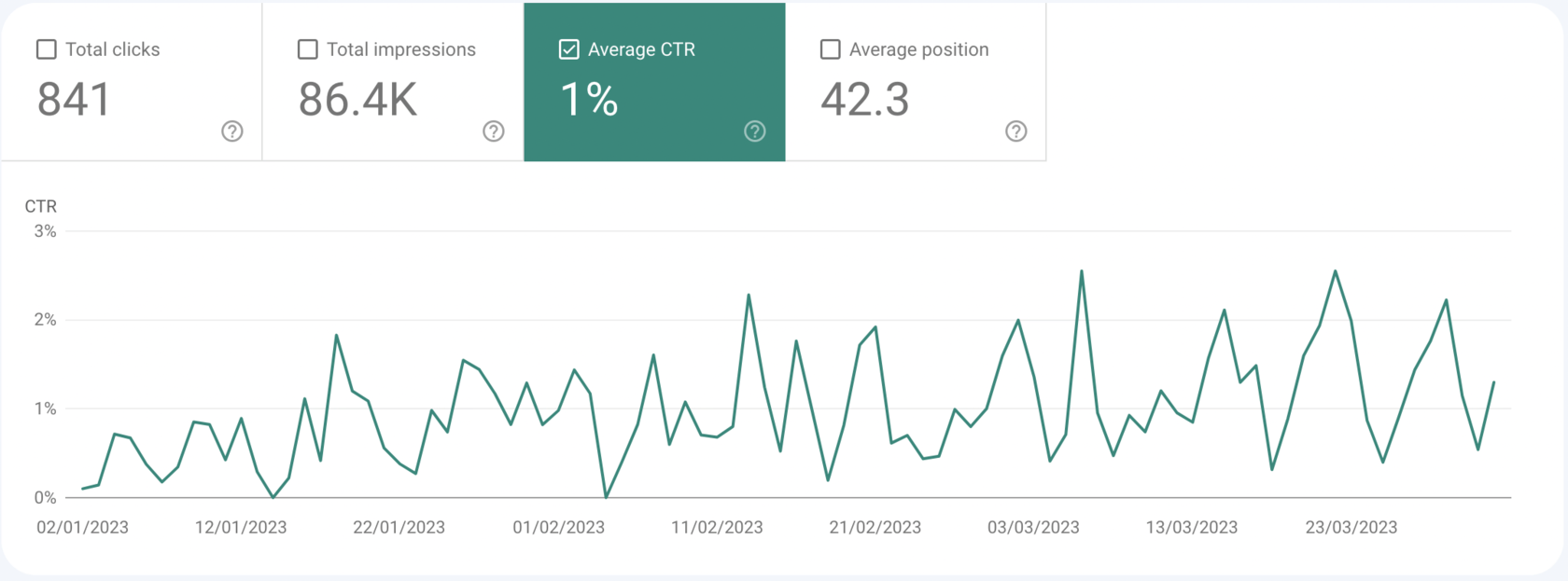
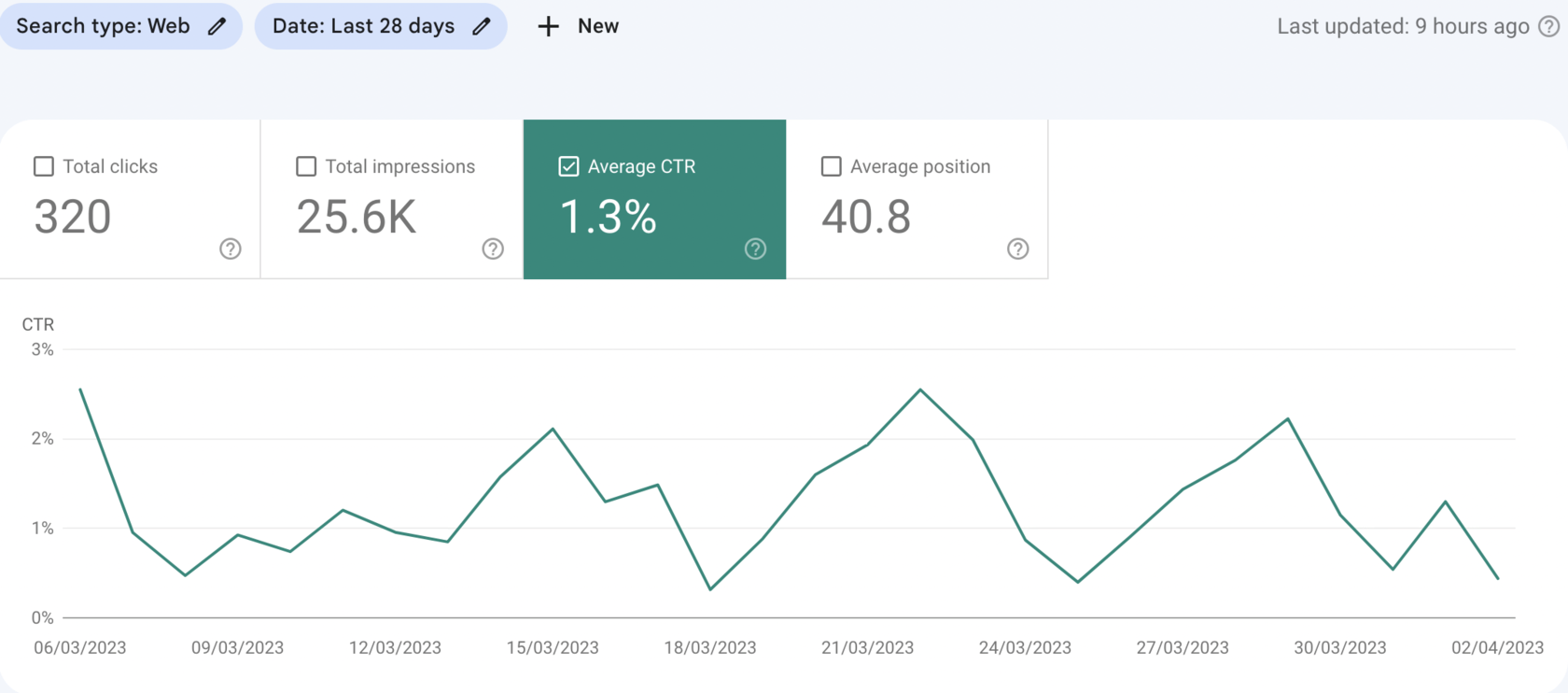
Take some of your keywords with same search intent. Have a look at site impressions clicks CTR in search results. And differ descriptions, or titles for them for couple of months — you’ll find a winner! And after that rewrite all of yours descriprions and titles! This can be done endlessly, constantly improving the clickability in the search results! important: each time you need to A/B-test one element - the title or description, but not all together, otherwise you will not be able to assess the impact of each specific change on clickability.
Result: CTR of snippets increased by more than 60%!
Even little bit less than 0.8
And it still growing, also this growing from 20% of new snippets (because it was an experiment and it went well)
Now we have these figures :)
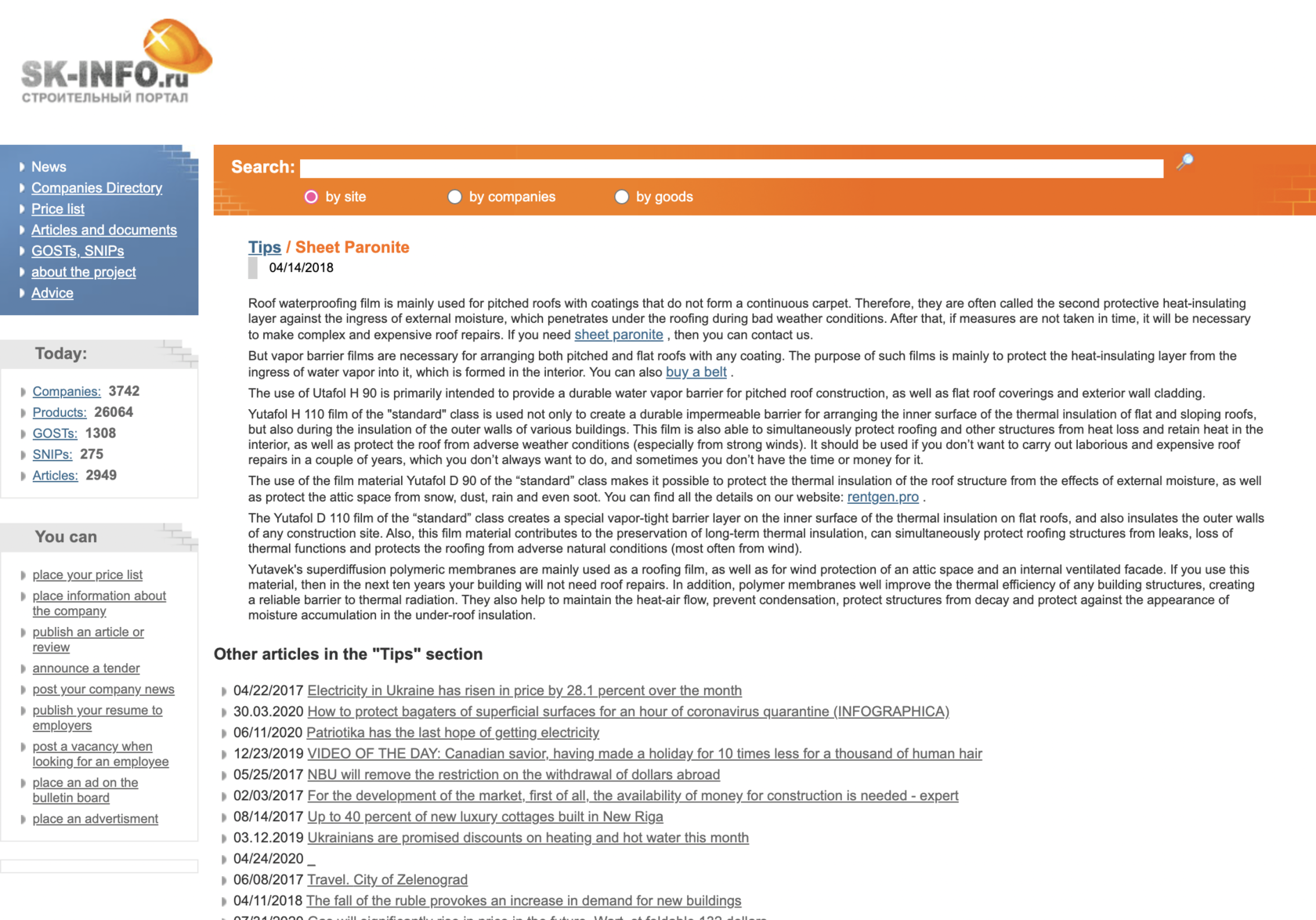
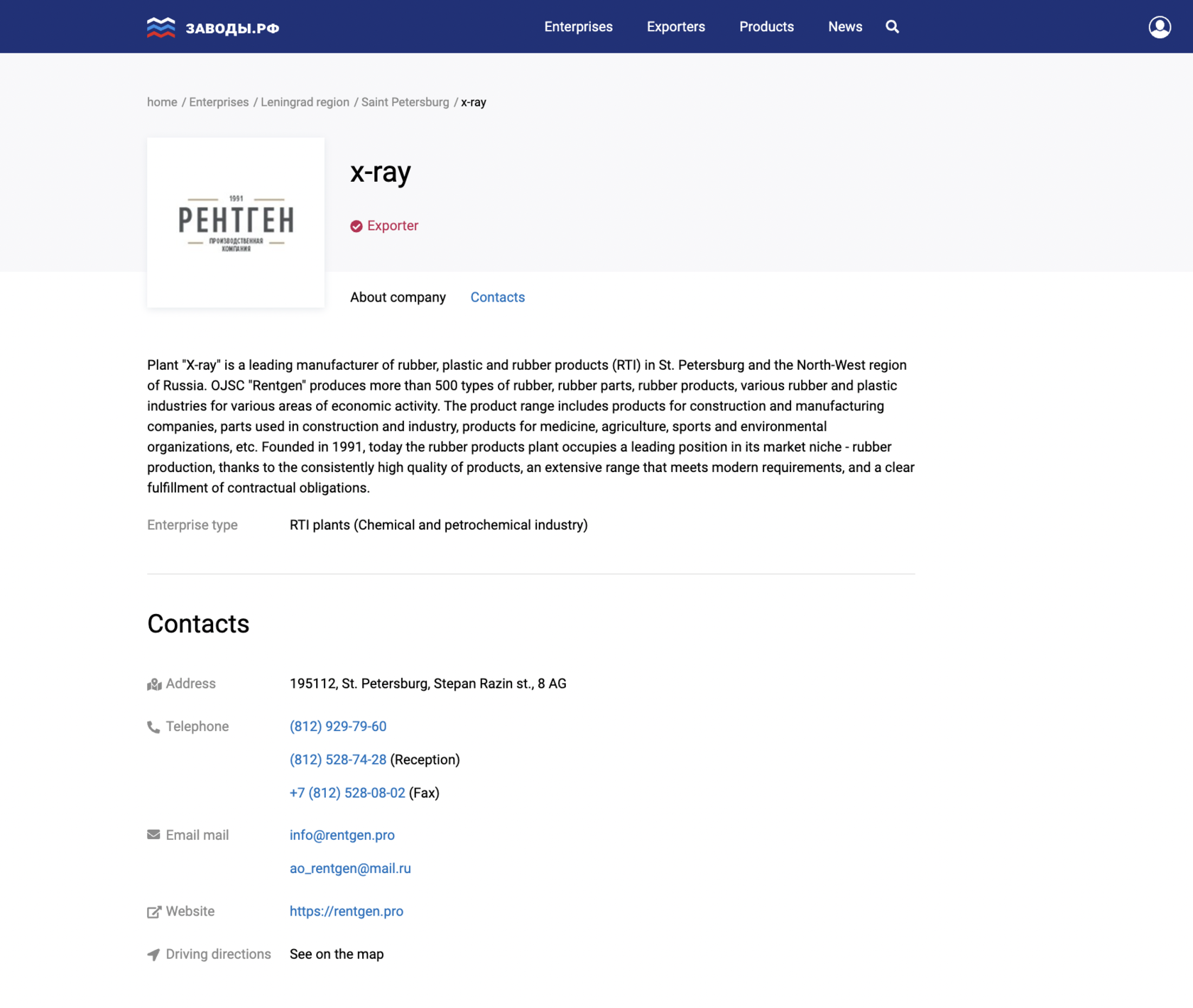
Technique 6: Refresh Industry Directory Links
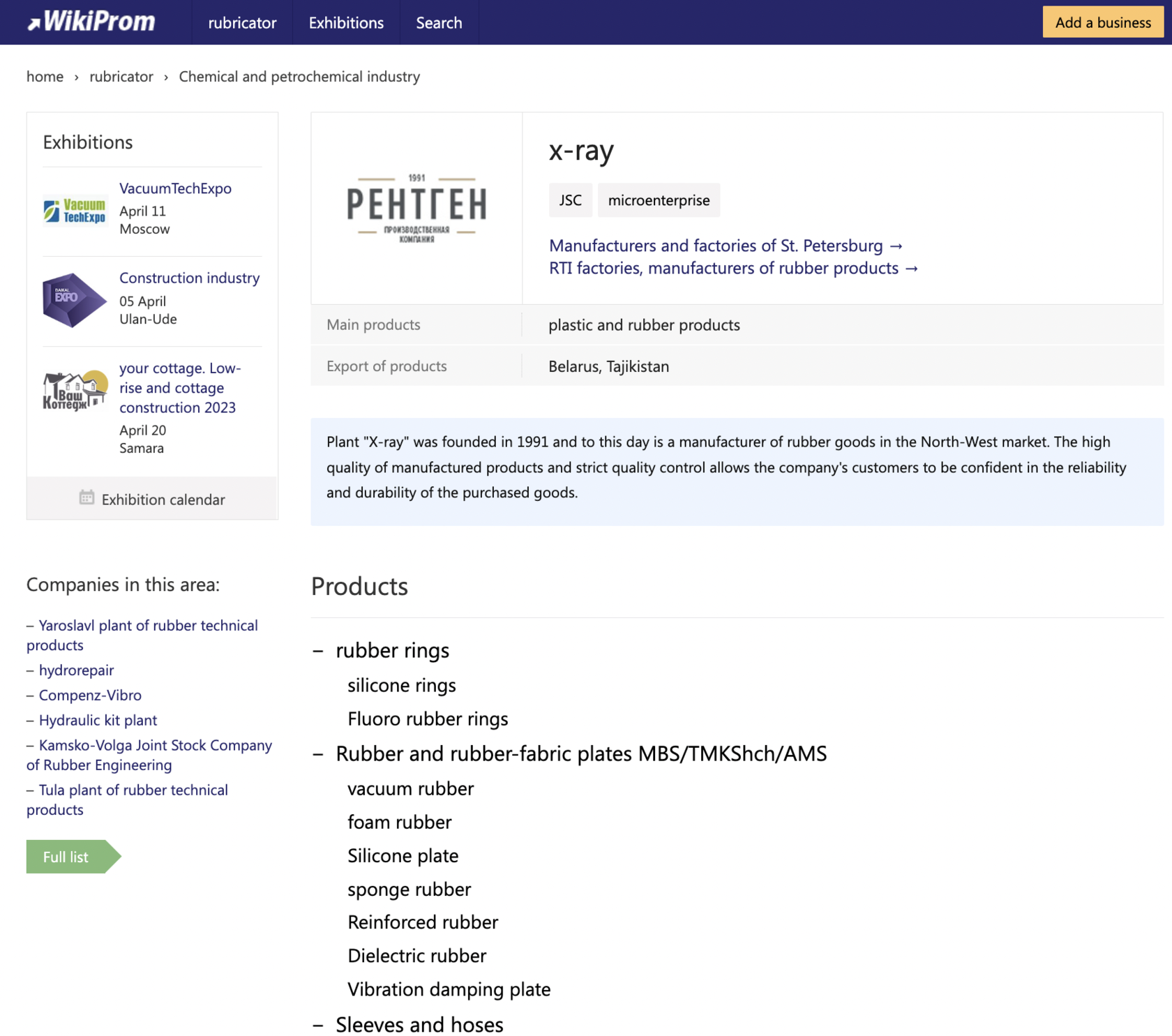
Yeah, excluding the fact these link is free, easy to set, also they could just give you more good conversional traffic. Also important to renew information about types of activity of the enterprise — of course, I added info about rubber bushings products. ** Results:** unclear, can say for sure right now, but I made this only on couple websites and need more time to collect data!
Technique 7: Build SEO Silos
That’s essential to make silo structure. Especially if you are trying to be a topical authority in one specific niche — for example in rubber bushings.
Result: of course I can’t separate the other factors from this, but results are good and only became better each time I make categories or new pages under the topic of “rubber bushings”.
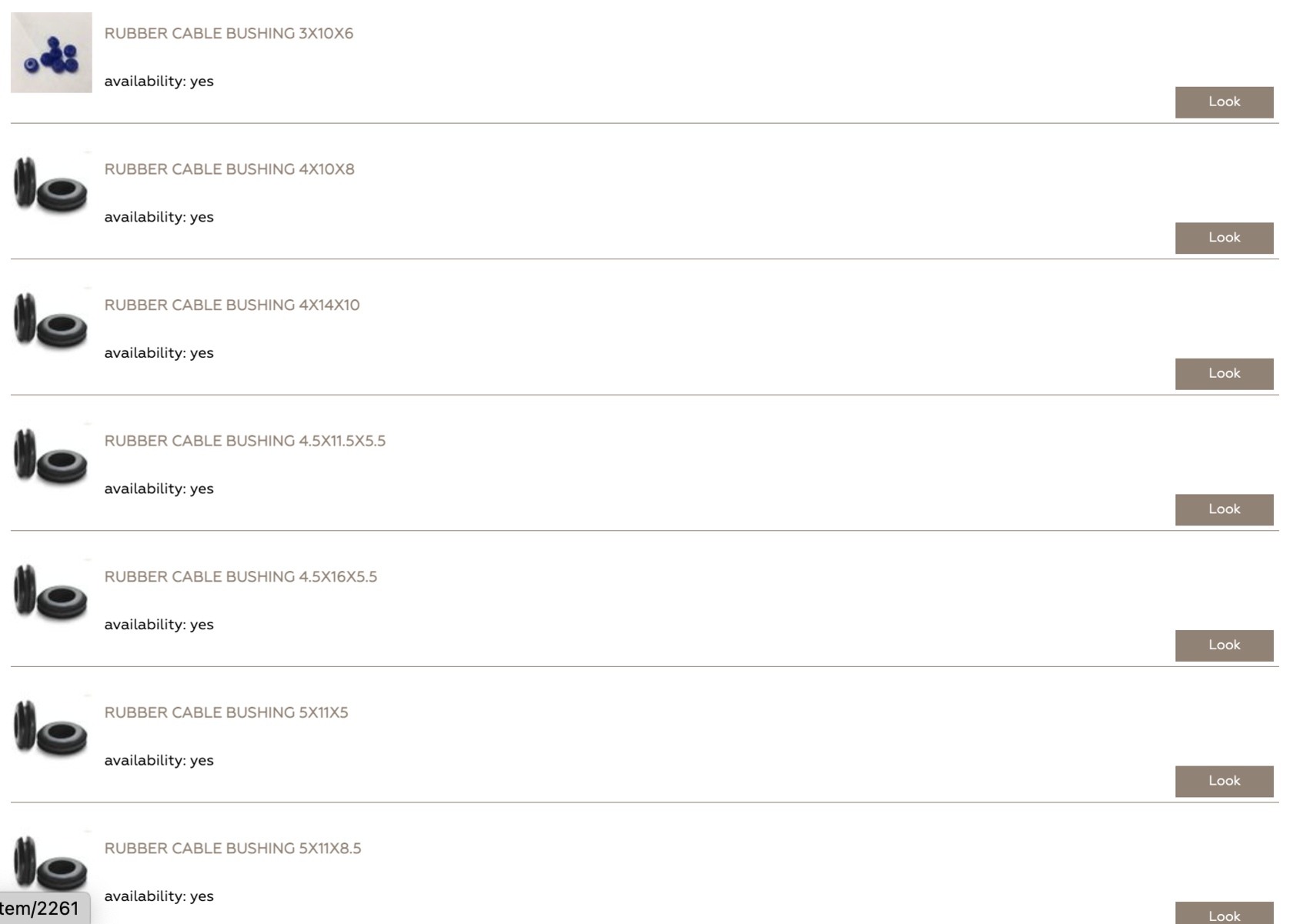
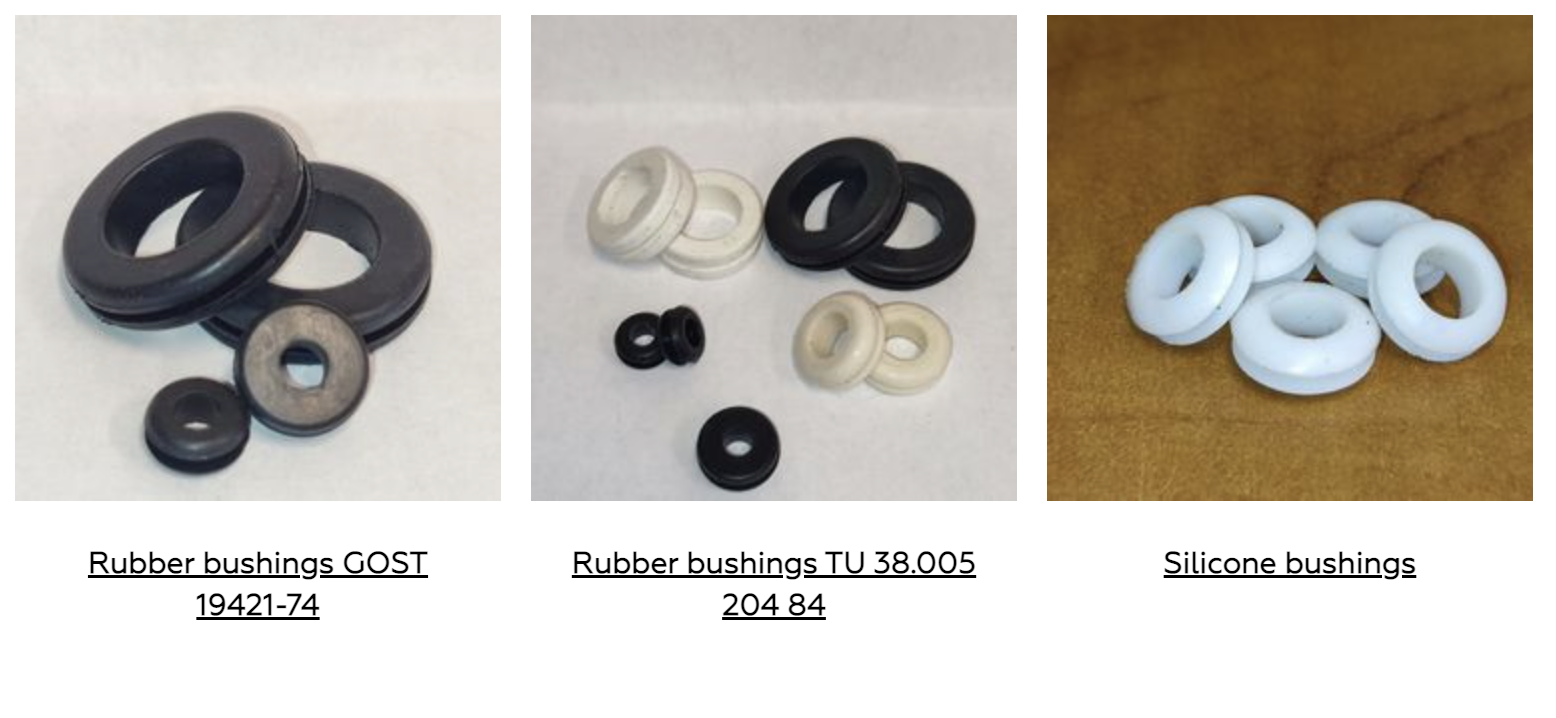
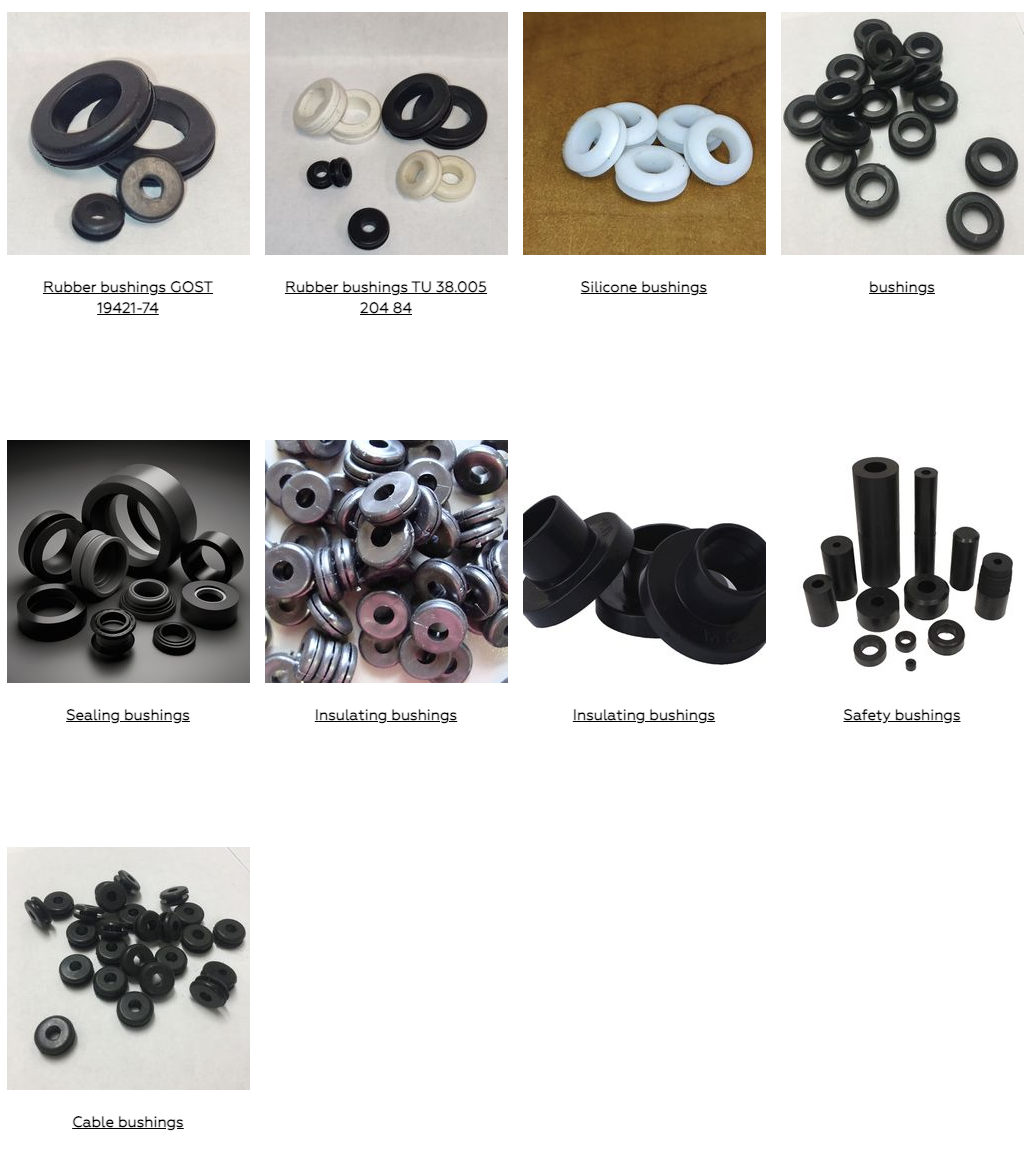
At the beginning there were no categories at all
First of all, I made these 3 categories
And after that I made others – and I’ll continue this process of making new pages for other keywords as well
Technique 8: Add Products to Search Feeds
I did it only in Yandex for a moment, but that’s because I didn’t find any “popular products” section for “rubber bushings” at any keyword I tried to explore. Anyway, that was easy, because I had a spreadsheet with all our items and I just needed to format it a little.
Result: I didn’t see our products in a Yandex Product feed. It might be caused by various of factors: from wrong prices to the inability to make a payment on the website.
Technique 9: Use Product Comments
I have an idea, which I desperately wanted to realize, but I couldn’t because of structure of CMS-system. Just make a randomized comments for every product. It might be not a 5 stars reviews every time, but it might give, for example, more information about this particular product.
Result: didn’t make it yet.
Technique 10: Let Comparison Links Open in New Tabs
Use this in B2B niches, it’s really convenient for the user and better for performance of your website, in this way for SEO also – search engines use info about engagement of users on every website. Plus it is just pretty convenient for the user – because now he can go from one tab to another and compare products easier. Win – win!
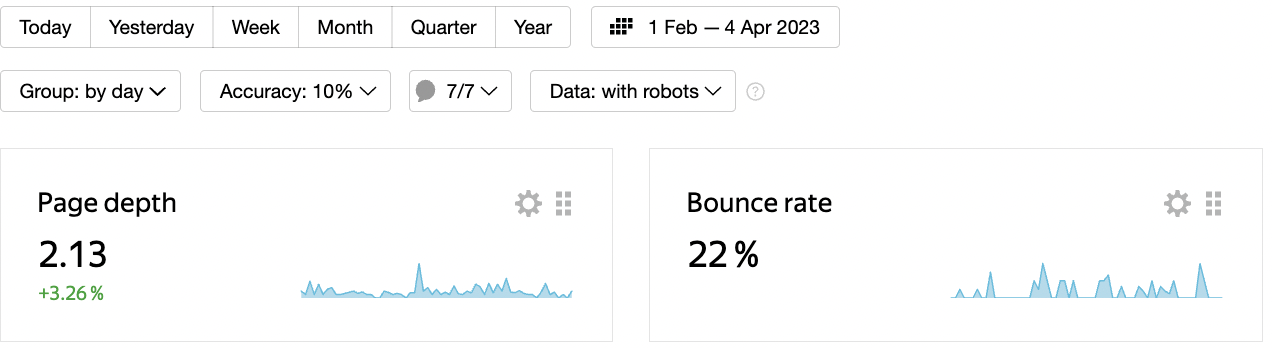
Result: on screenshot. Here I can say for sure – this works. I implemented changes 28 of January and show you statistics of 2 months comparing with previous 2 months (where other changes already have been working from November, that is 3 months).
May be 3,26% of raising the characteristic is not something huge, but multiply each small improvement of the site by one fifty (yeah, it’s possible to find so many little things to improve) and you will already get very interesting figures
Technique 11: Create Product Videos and Optimize Them for Search
Another thing, which you better use! Most of your competitors think that video have no use in their B2B sphere. Of course, for them it’s right idea, if you don’t have videos — they don’t work. But you may outstand your competition just by making video matherials. For example, this project may use lots of different approaches for videos: I want to make short videos at least for every best selling bushings. Or as we have couple of videos of Denis around his employees and machines inside his manufacture.
Result: the trust is needed for the customer to even make some effort giving you his information. Videos are a pure condensed trust, which you can provide to your potential buyers. Also videos increase further conversion rate for payment of the invoice, because they understang the product more and feel more confident to make this deal.
I have to pay tribute to our main and most successful (so far) competitor, he used this technique, but we haven’t yet…
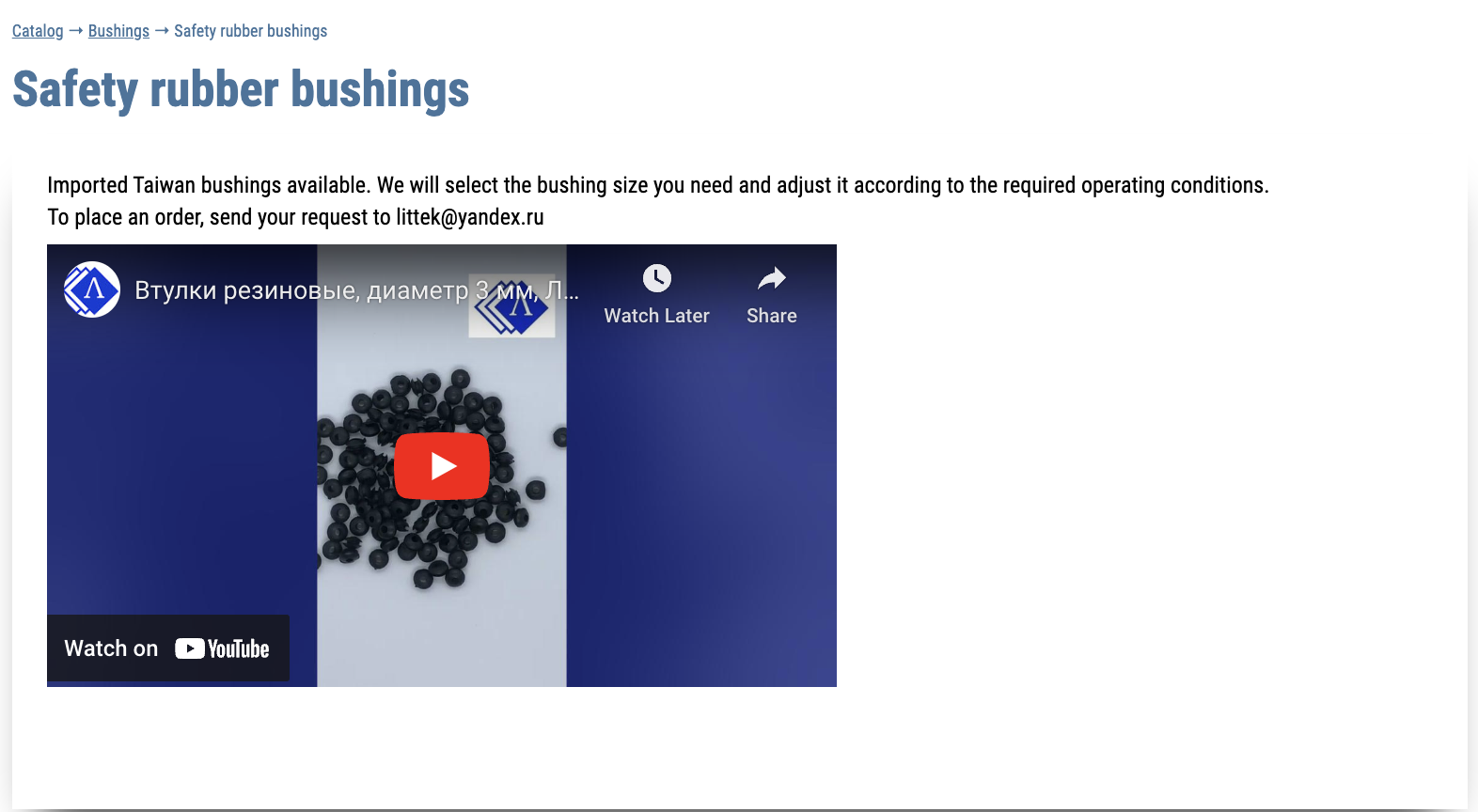
Video for the page of Category
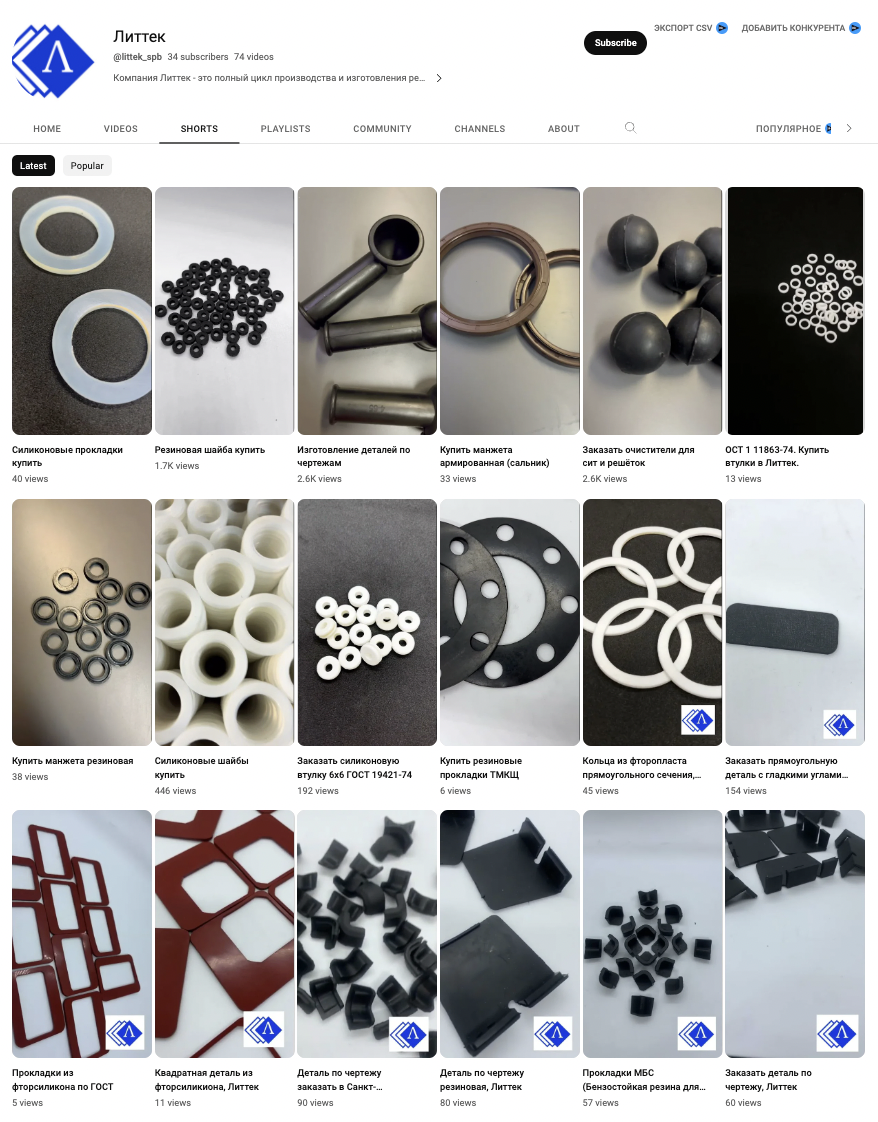
Videos about different rubber products he produces
Chapter 4: How Online Visibility Grew Over Time
How I Divided Keywords Into Groups
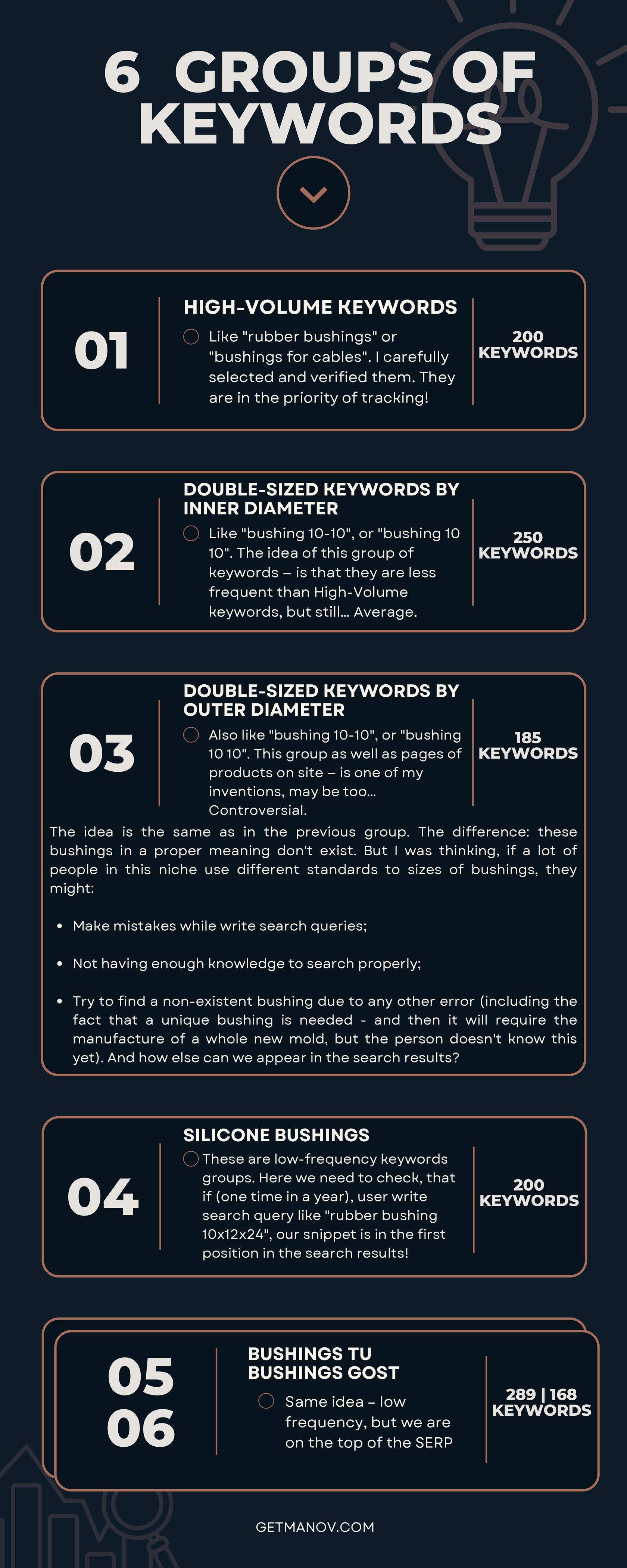
All in all, 1131 keywords.
_I collected far more using tools like Yandex.Wordstat (Russian tool for keyword search quontity). And then we reduse it greatly with client’s employees, because they understand more about bushings we can sell.
The keyword set was then reduced together with the client’s employees, who understood which types of bushings the company could actually sell.
Now, Let Me Show You Some Analytics
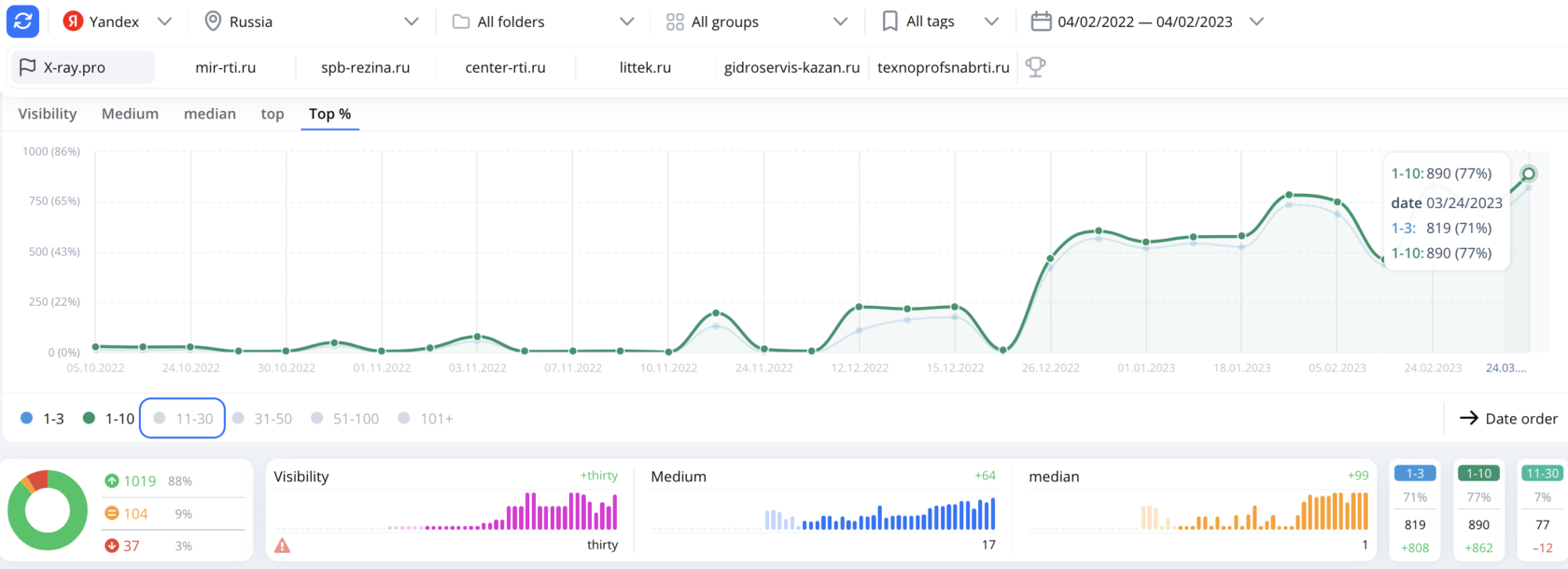
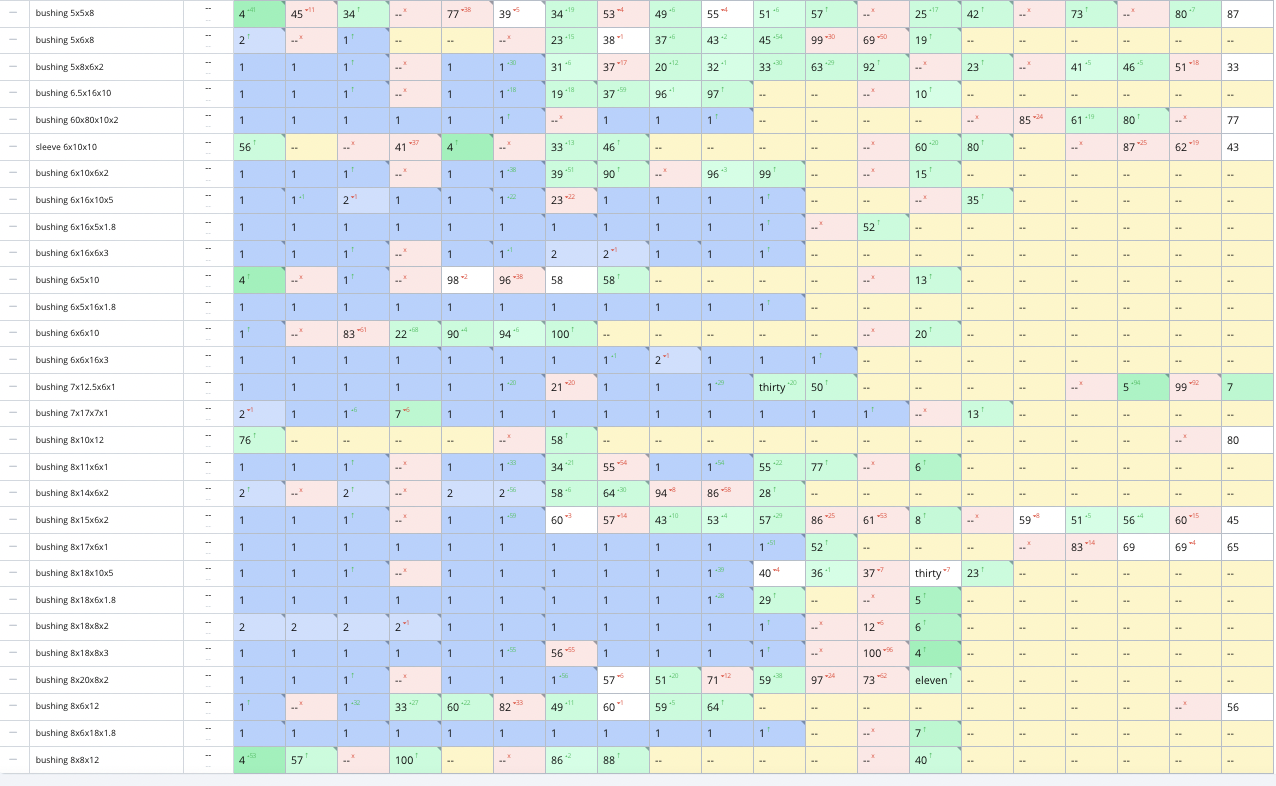
Here you can see the gradual growth of positions on low-frequency queries in Yandex
And here… The difference in the algorithms of different search engines… In fact, gradual growth is also visible, but some pages sometimes fly out of the index, and there are many other problems that have yet to be investigated and eliminated
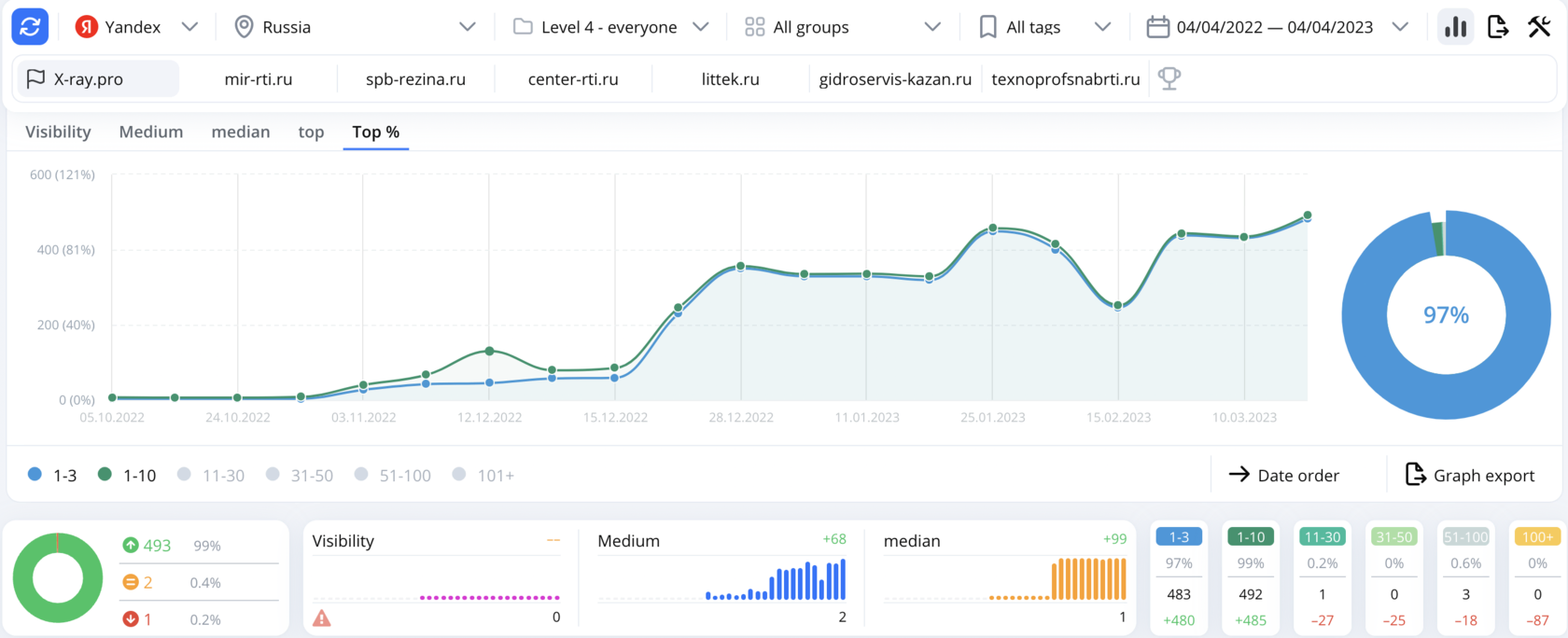
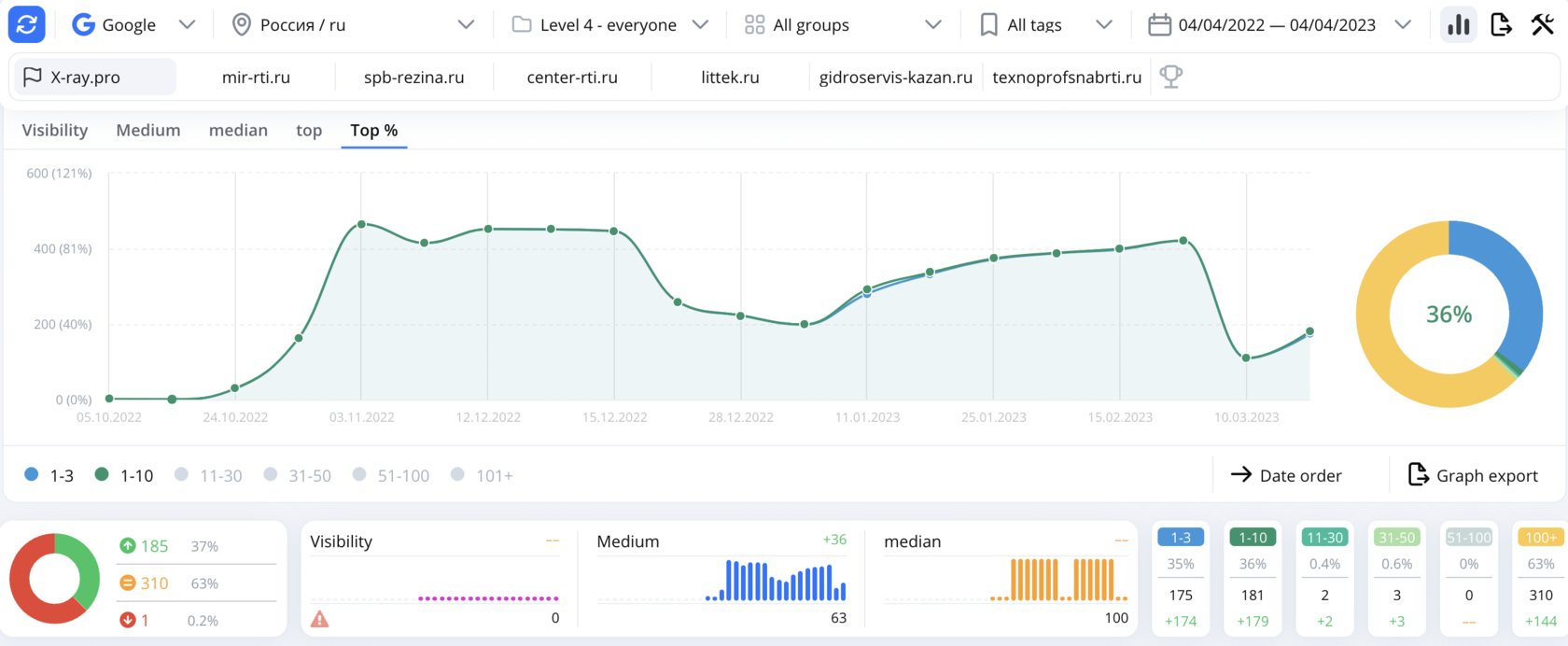
Positions Growing
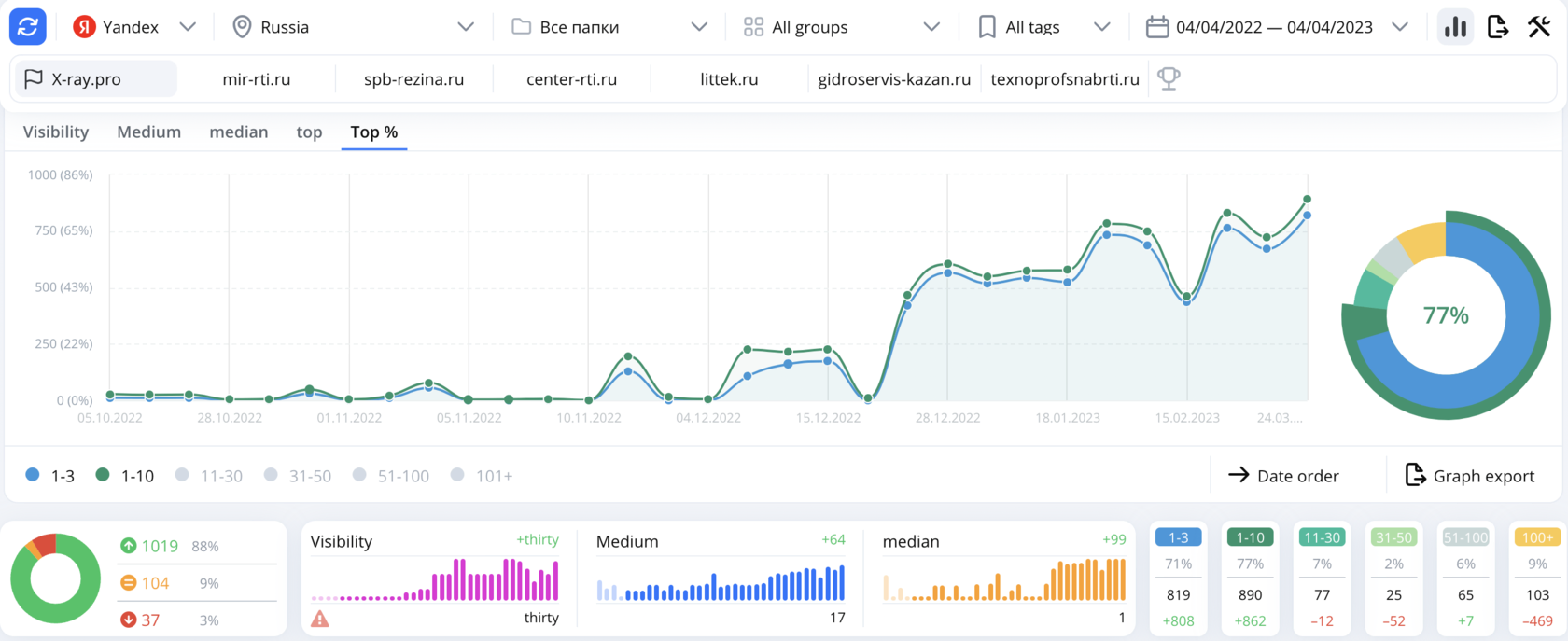
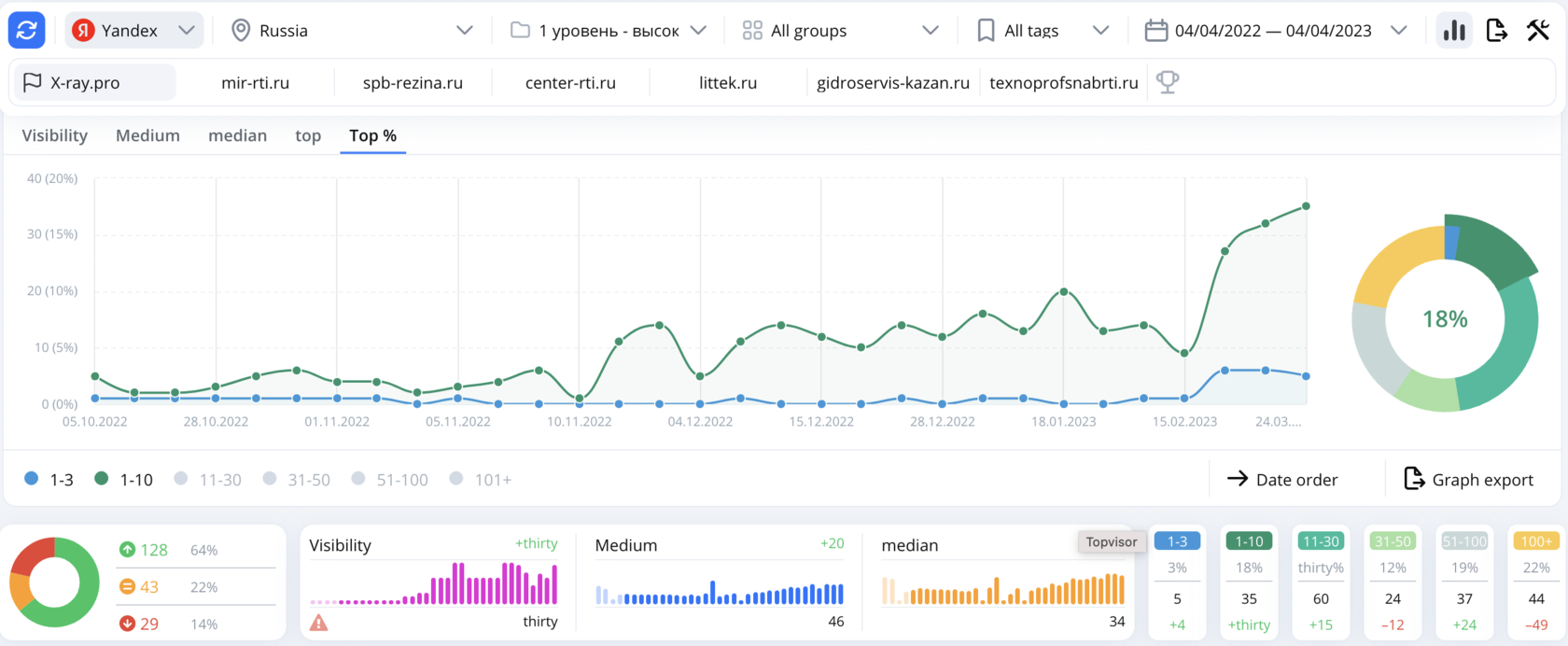
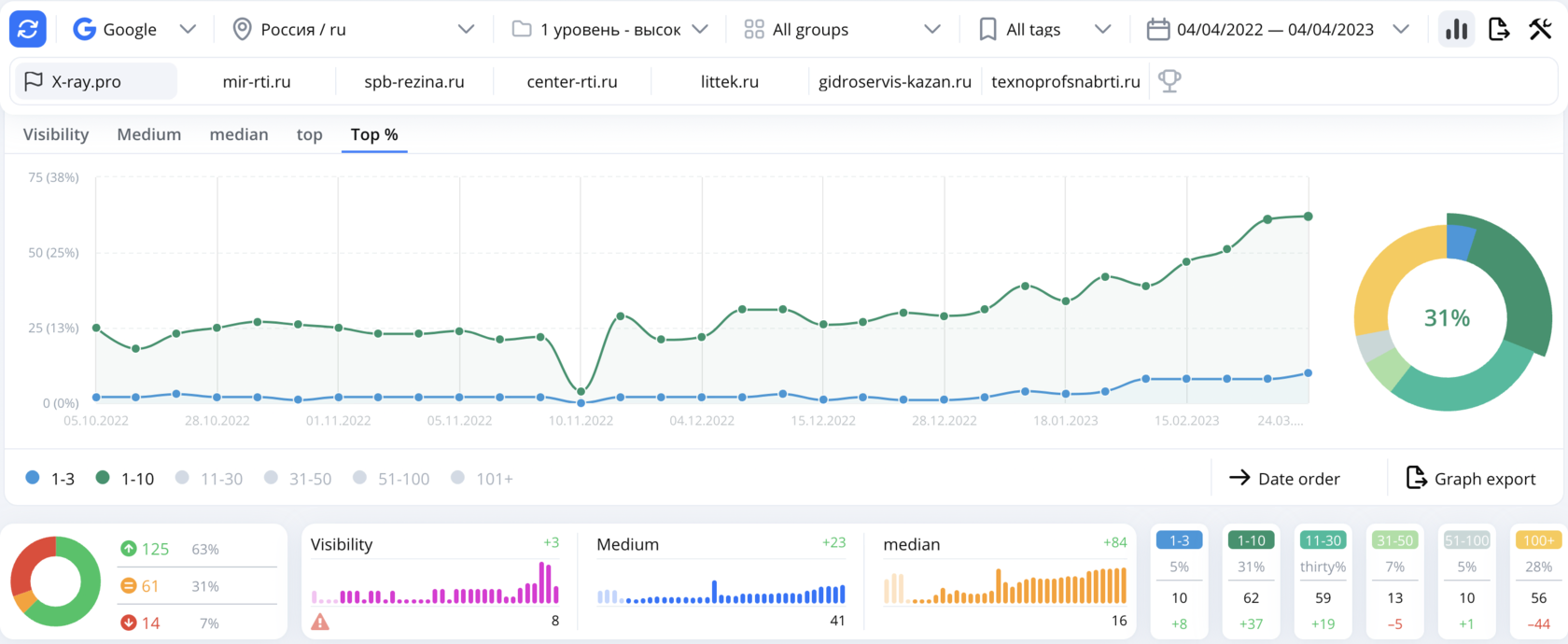
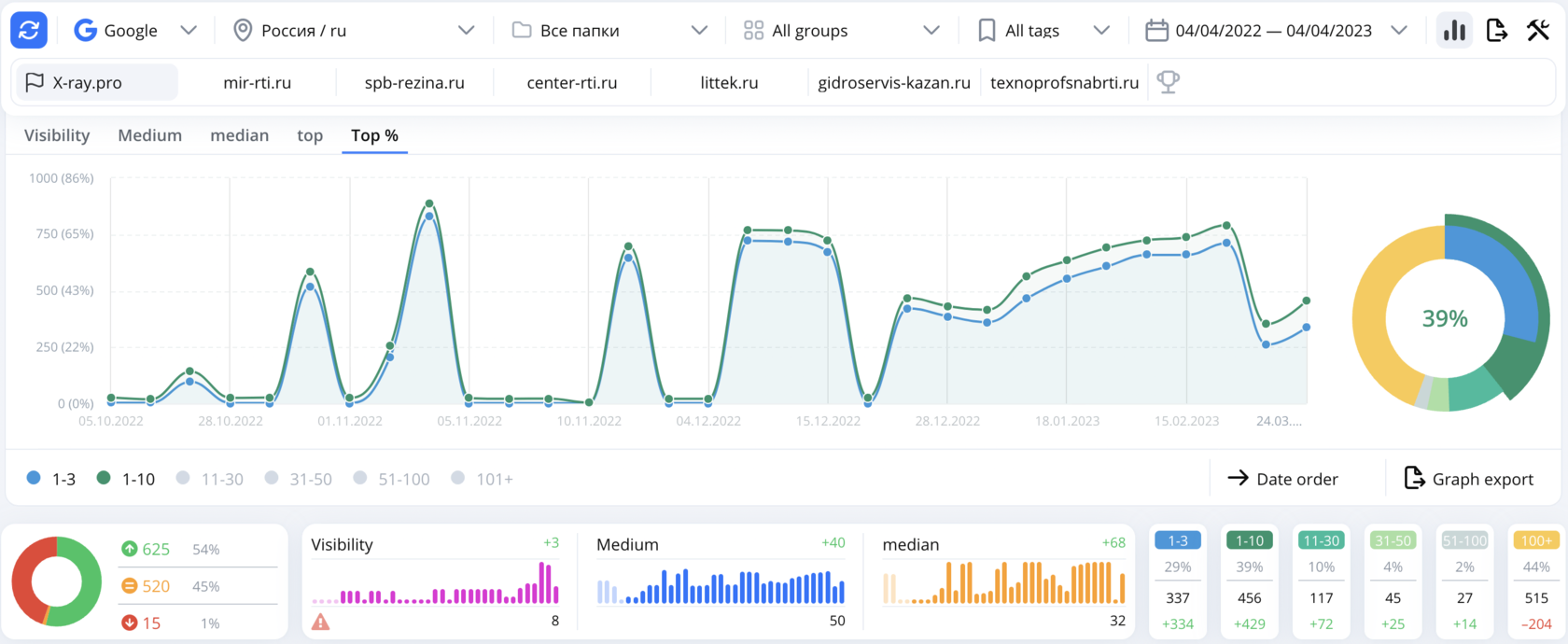
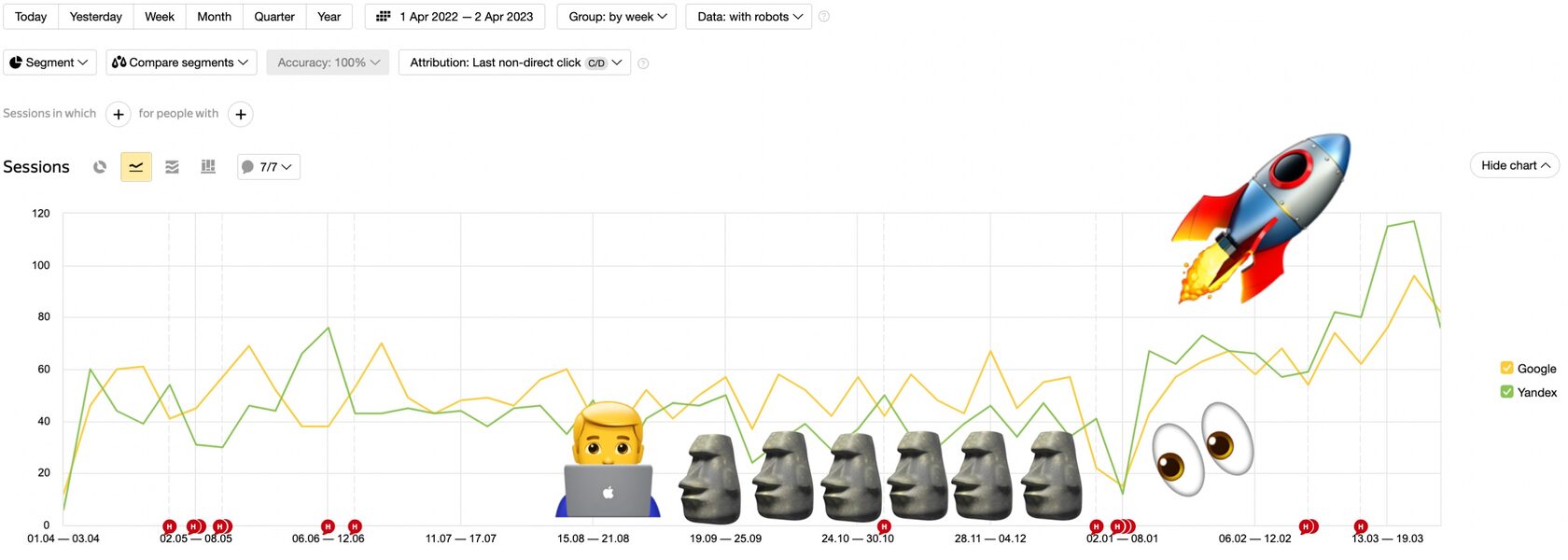
Search Engine Traffic Growing
Chapter 5: Financial Results
The most delicious chapter. Did all these things, some of which even different from standard SEO which you can see in other cases, give us financial results?
How we collect leads:
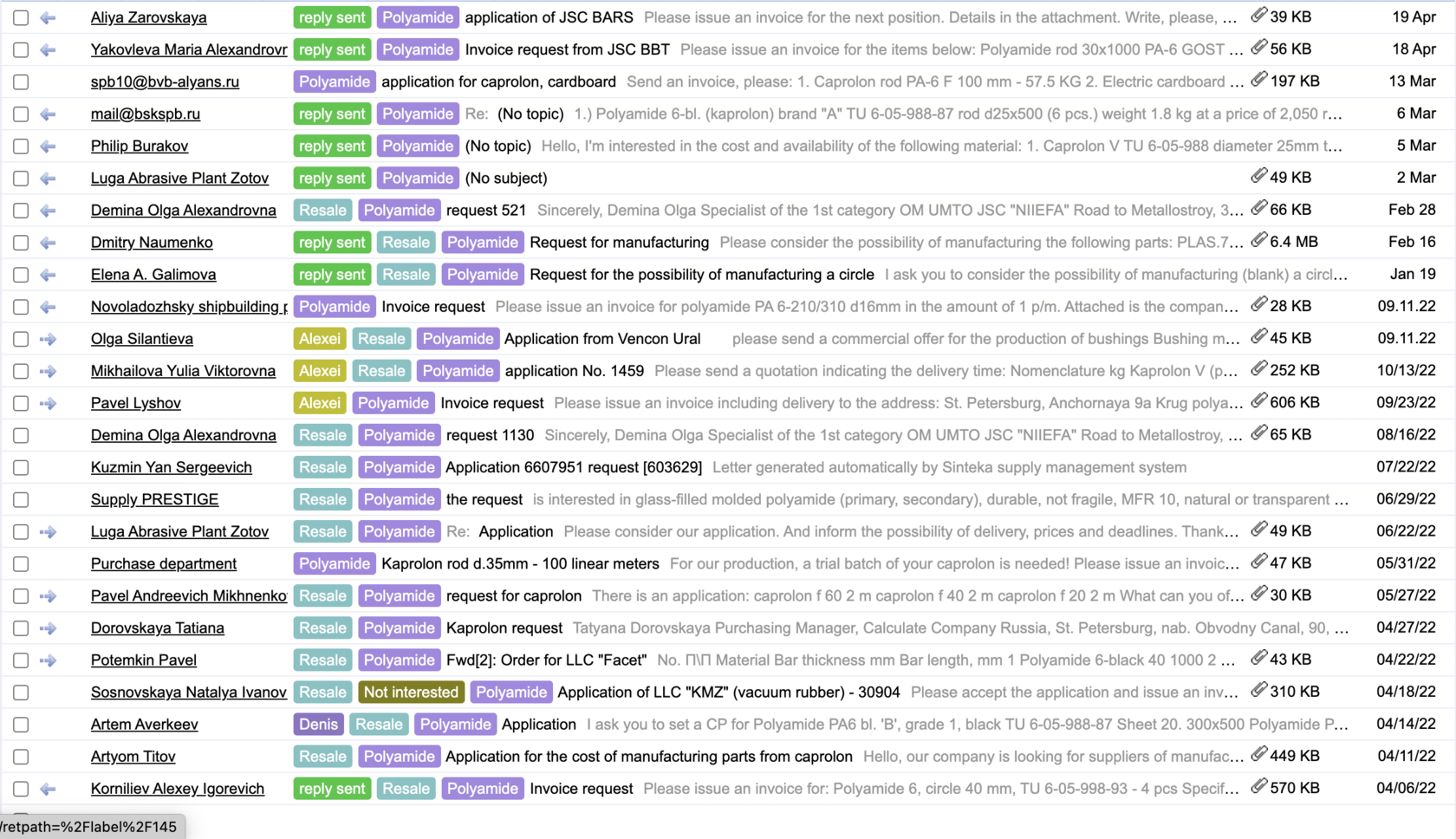
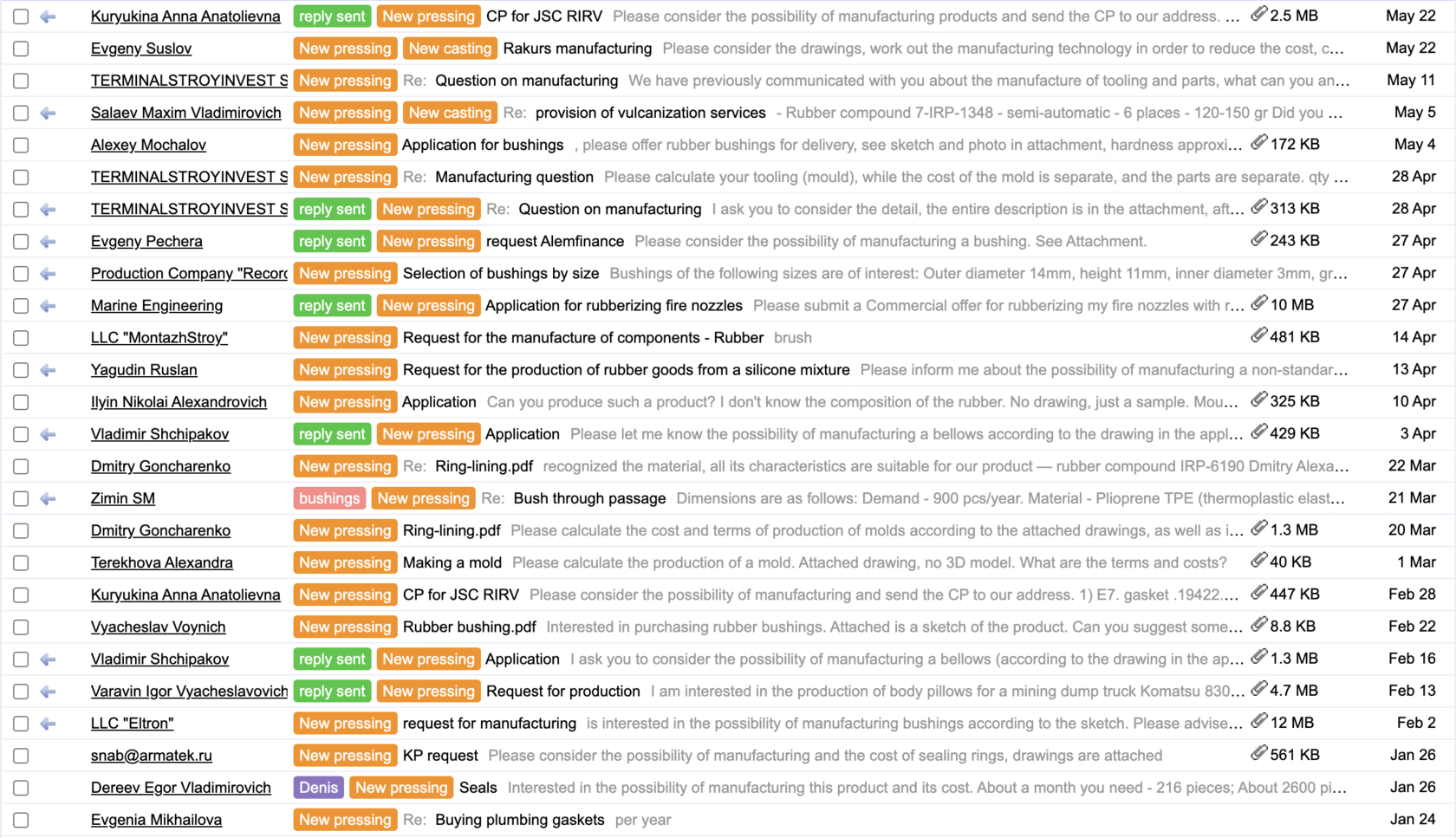
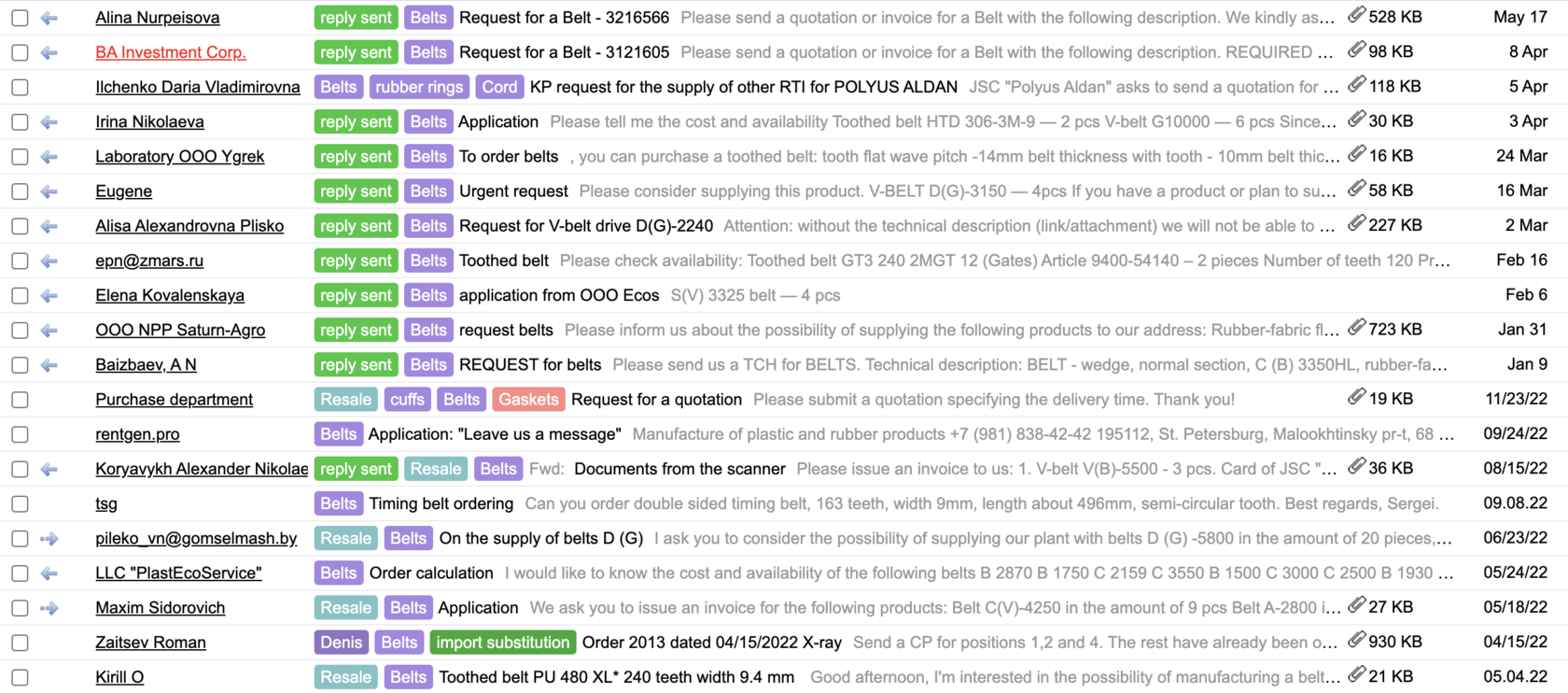
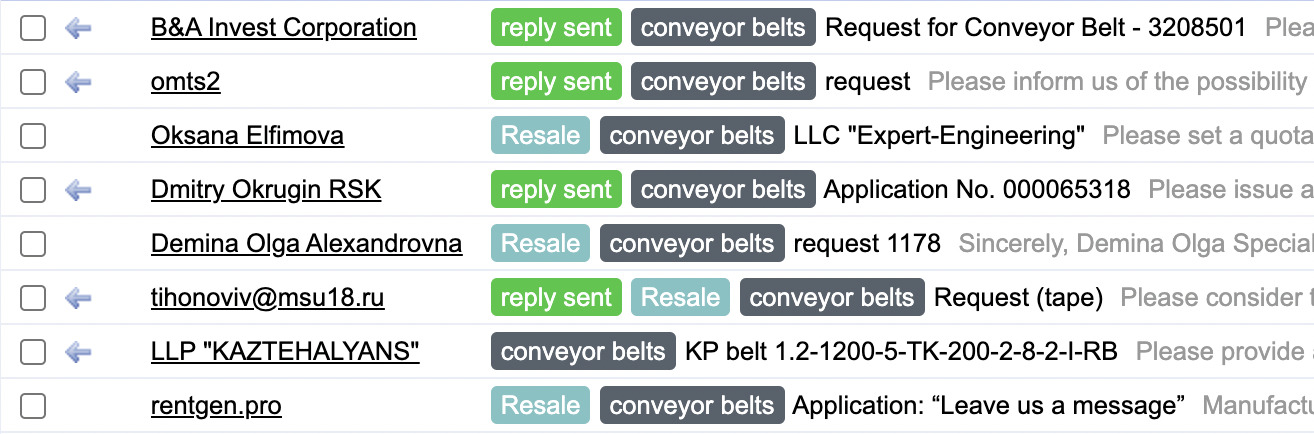
1. All leads come in commercial Mailbox. Every Mail message are tagged by employees. Sometimes potencial clients call first – but employees ask them to send a mail anyway.
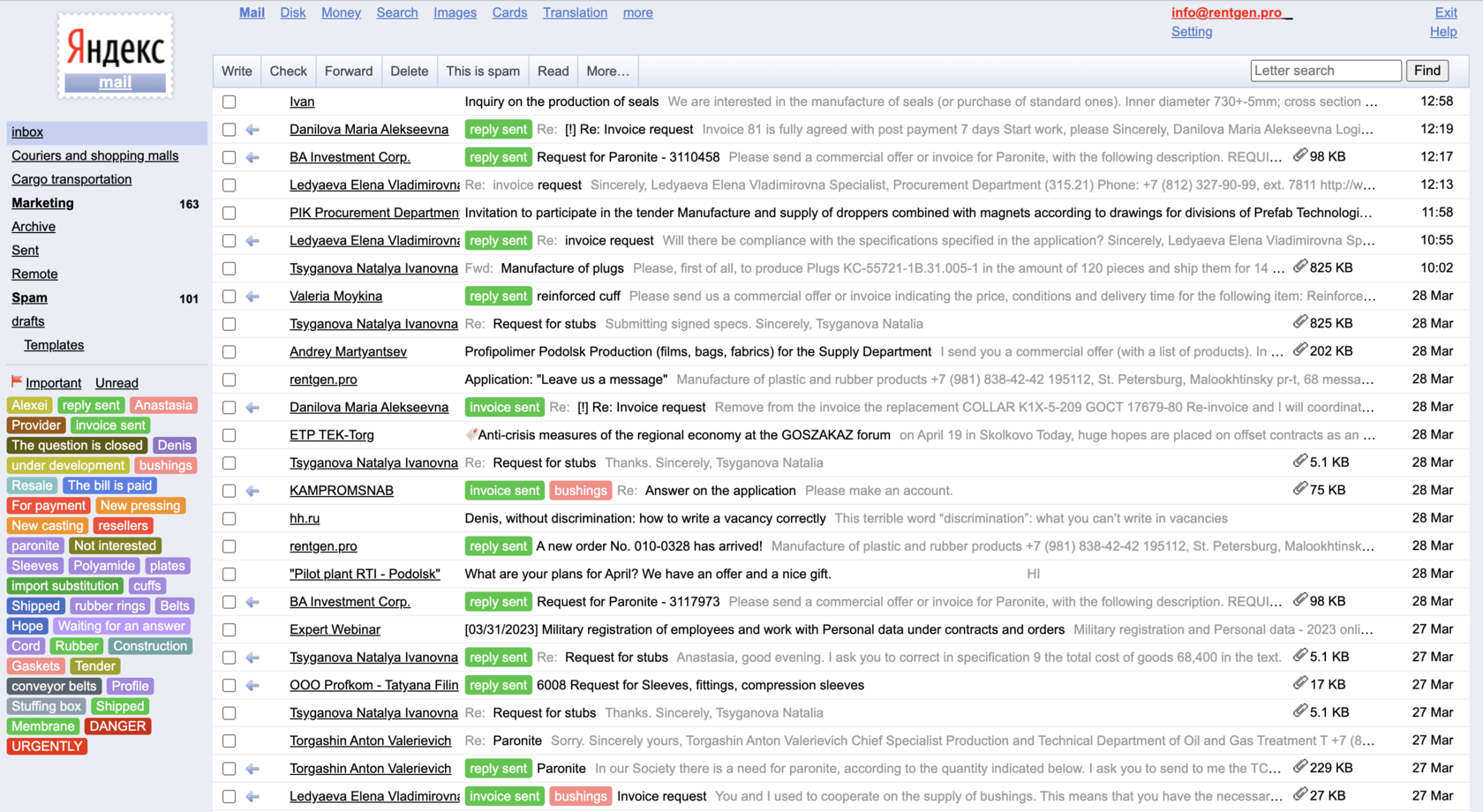
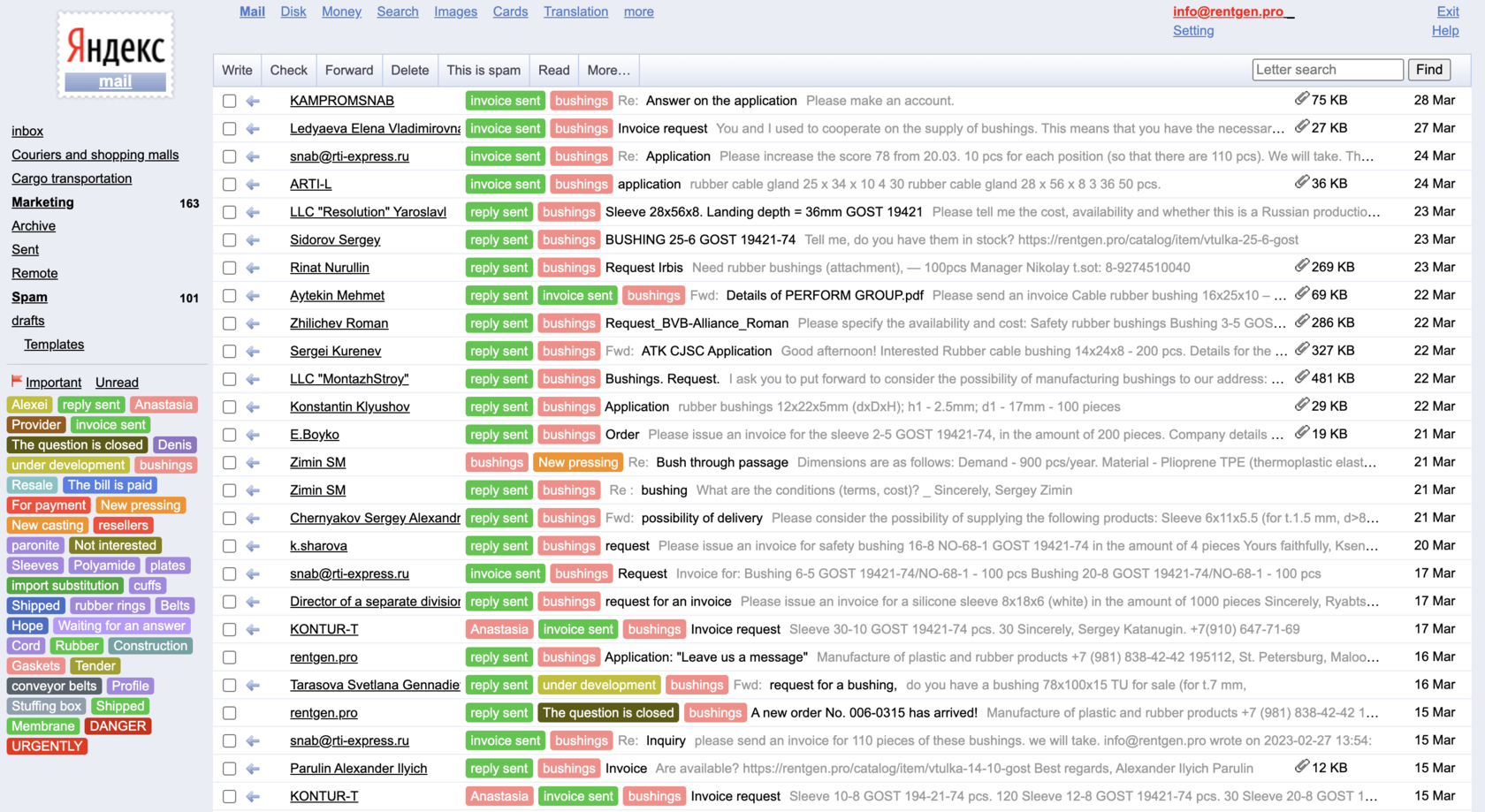
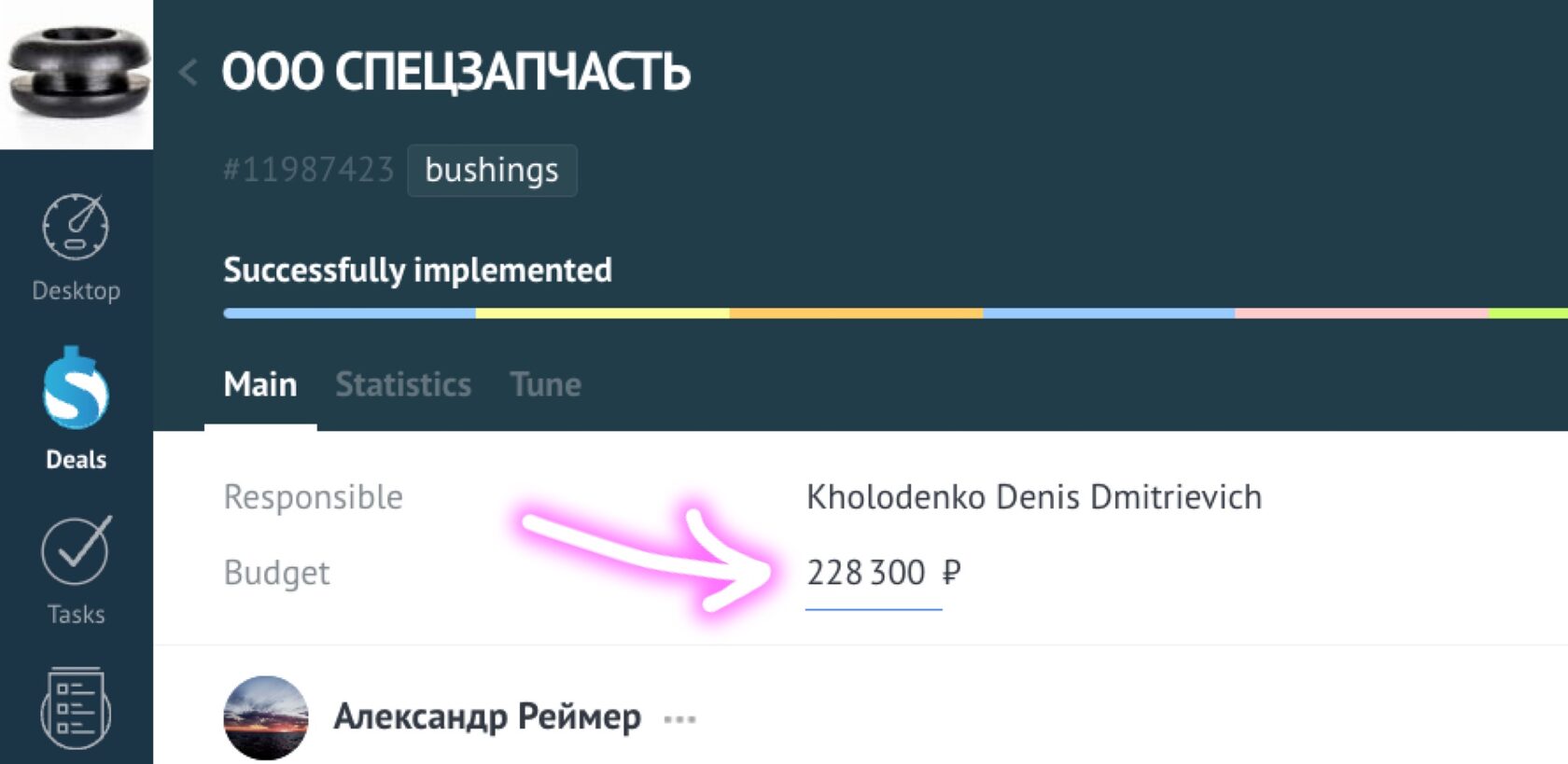
2. To understand, which leads are new — we use AMOCRM. There we carefully write potential cost of the deal. Also we tag every unsuccessful deal by reason, why it was not succeeded.
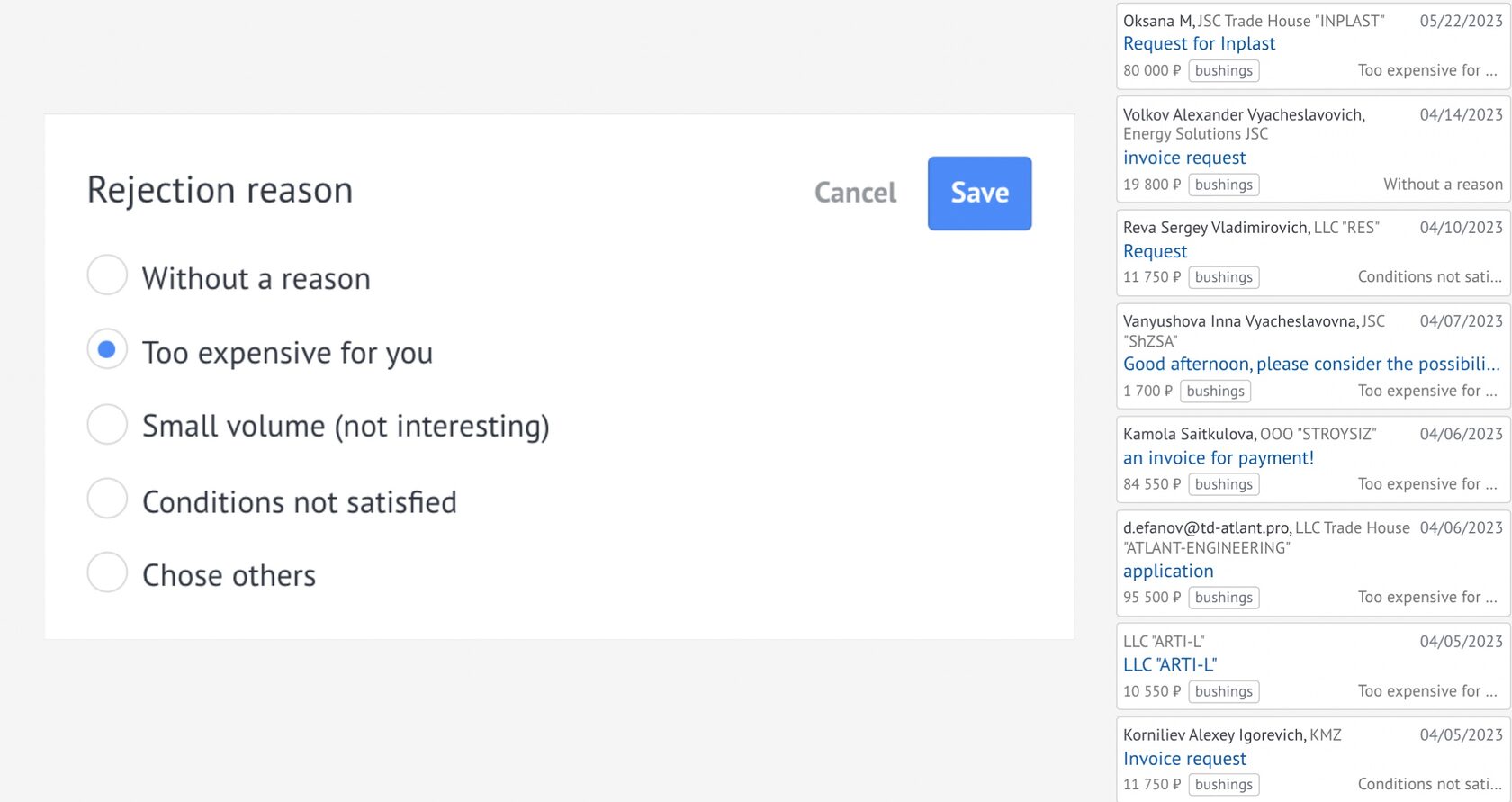
3. To assess the full impact of SEO across all categories (even those that were not the focus of my work), all other inquiries from the website were additionally tagged, as I also conducted overall website optimization, including all pages.
Results and Analysis
We have carefully separated all bushing transactions from old customers from all bushing transactions from new customers who came thanks to my work. New customers in the green column: successfully implemented. Almost all other leads in different columns also will go in “successfully implemented” column.
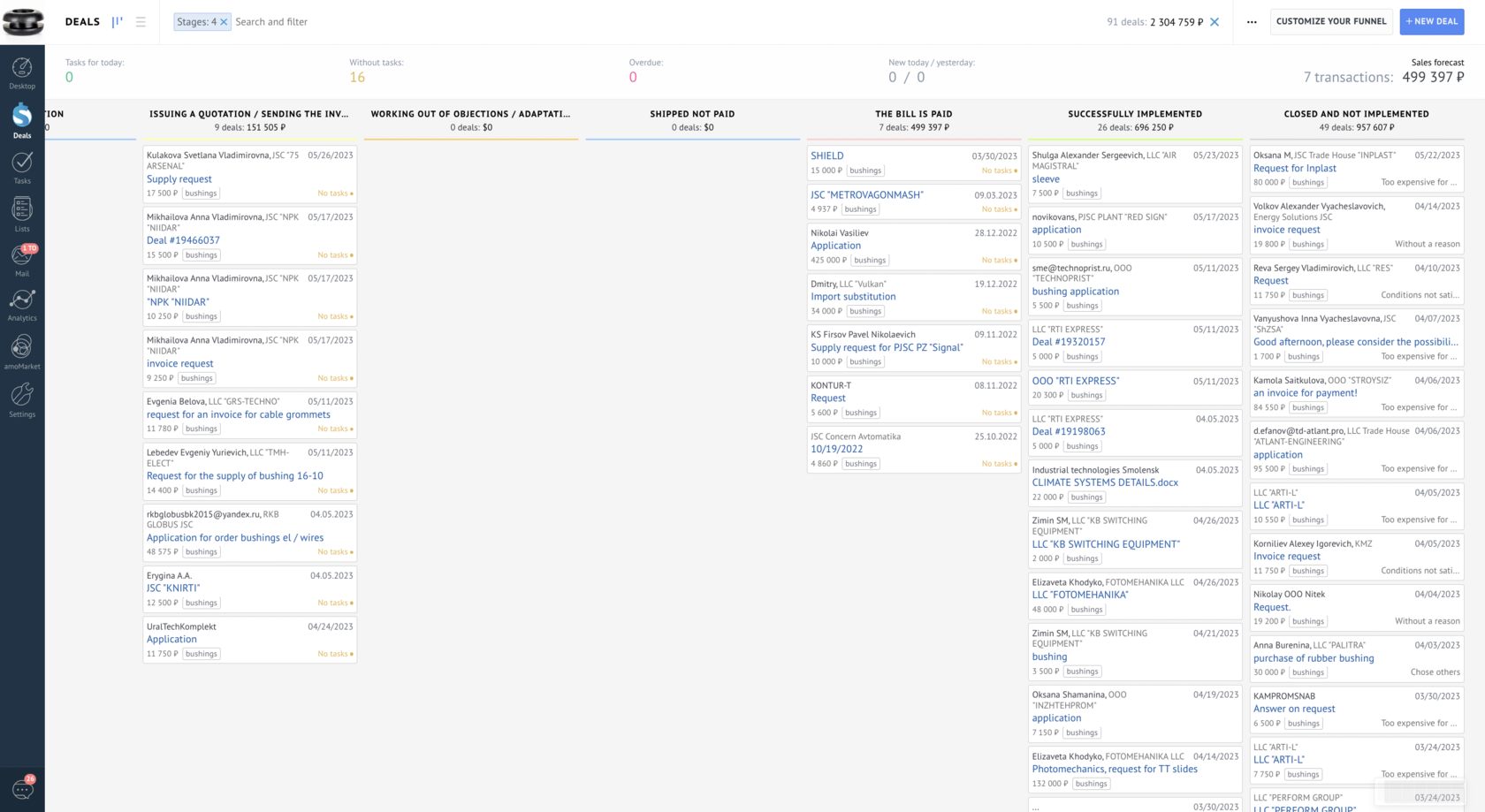
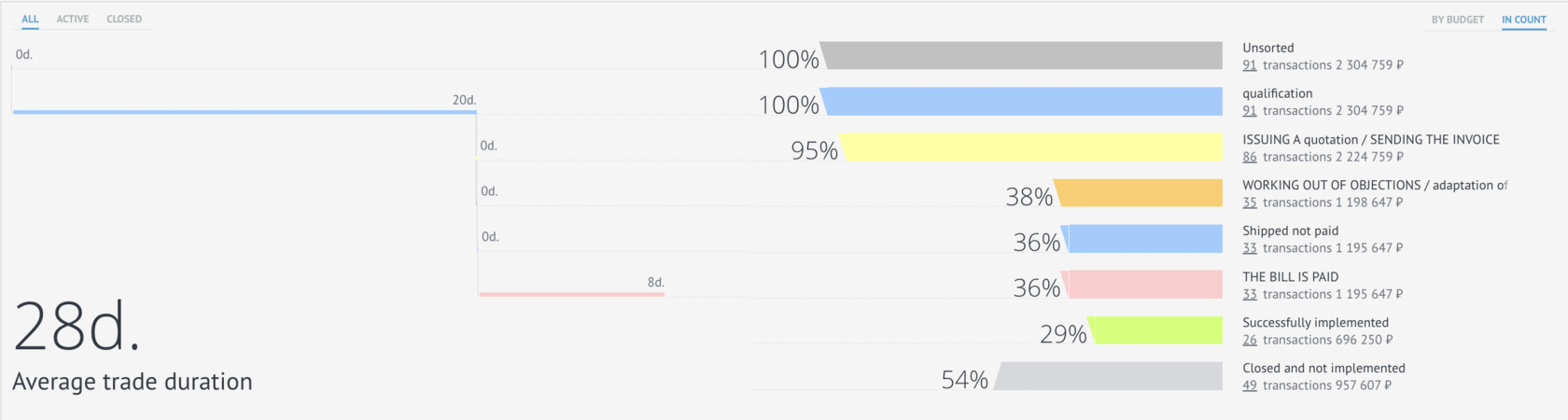
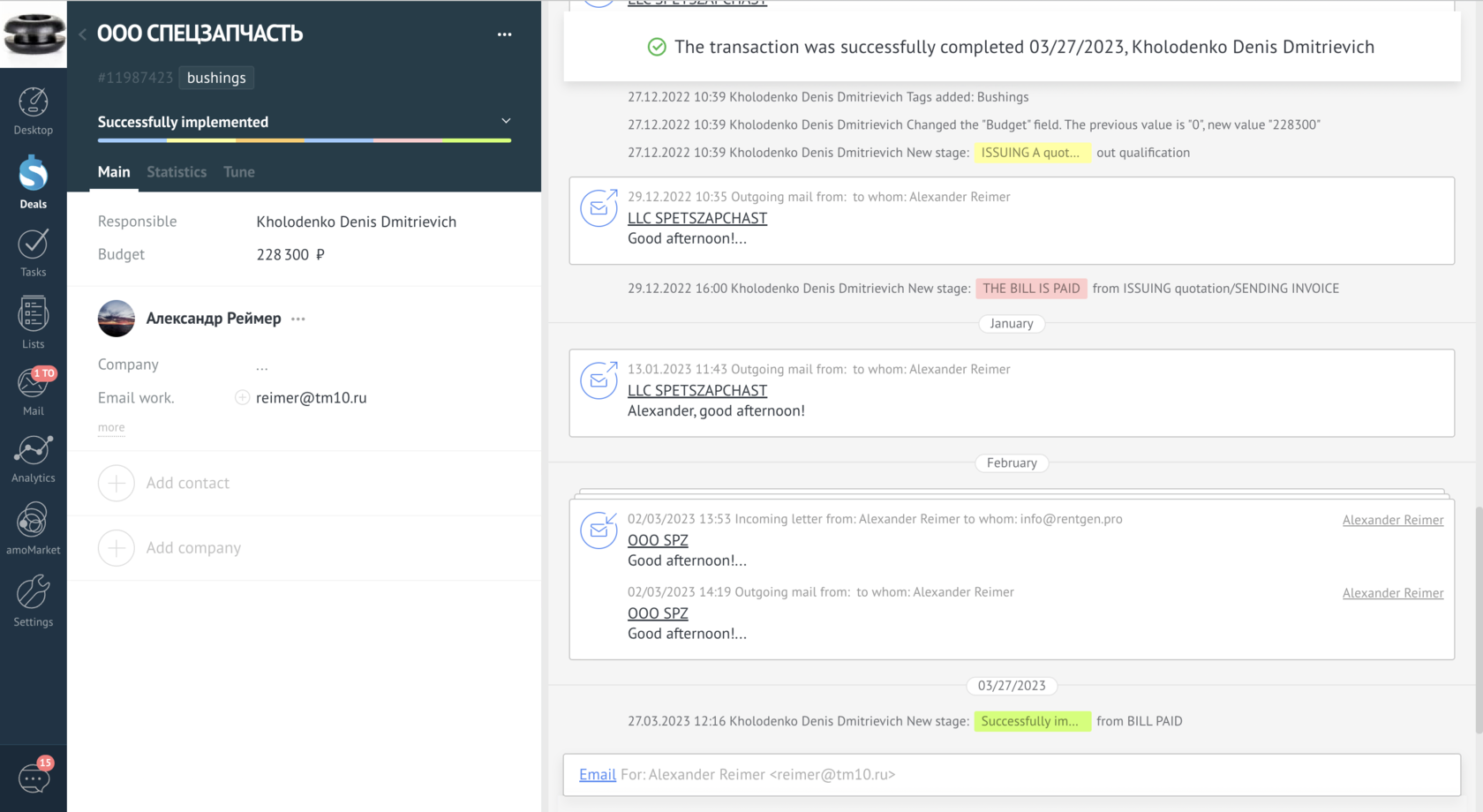
Due to the fact that the client is ready to share any information on the project, I can provide accurate financial data on the project.
New inquiries from the Rentgen.pro website for bushings: 620 pieces
Inquiries that have reached the price negotiation stage: 168 pieces
Out of those, there were 41 new clients and 47 closed deals
Current revenue from only new inquiries: 1 218 208 rubles
Net profit (the average return on new transactions was 67%): 816 199 rubles
Cost of the SEO contract (the contract was for 1 year): 500 $ * 12 months = 6 000$ = 510 000 rubles
ROI (Return on Investment) for SEO: (816 199 – 510 000)/510 000*100% = 60.04% currently
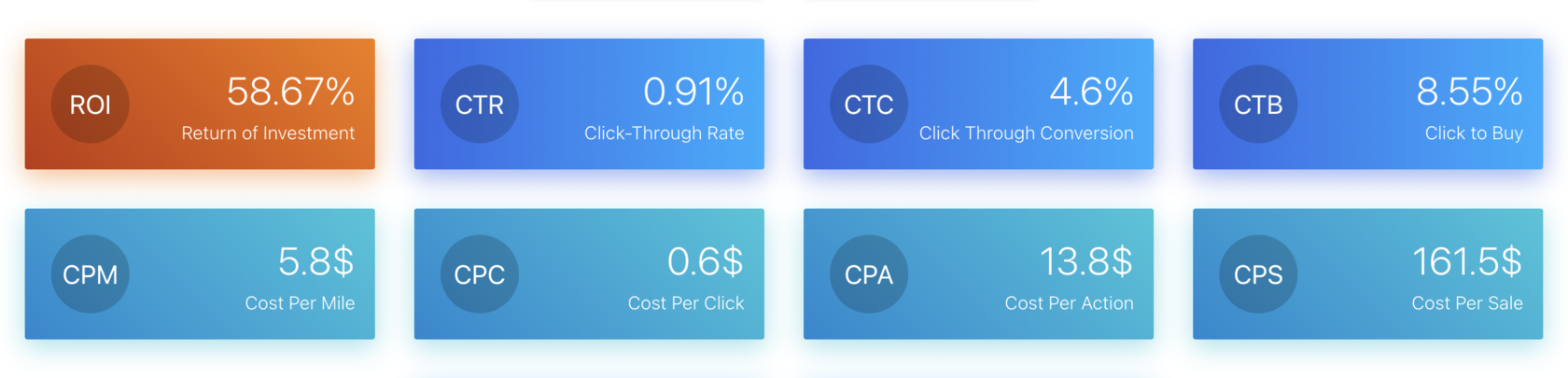
But that’s not all! Let’s calculate the return on investment until the end to understand the actual ROI of the SEO work.
SEO can bring results for about 3 years after all the work is done – on average.
Thus, Potential revenue during the period after SEO optimization: (1 218 208/12 months) * 36 months = 3 654 624 rubles
Potential net profit: 3 654 624 * 67% = 2 448 598 rubles
ROI Fina****l: (2 448 598 – 510 000)/510 000 * 100% = 380%
And here I don’t even take into account repeat sales to these new customers – and in the B2B market, the percentage of repeat purchases after the first one, as you know, is much higher than in the B2C market.
Chapter 6: Thoughts After the First Year of Work
Bonus: B2B SEO Tactics I Discovered
If you are looking for MORE things, which most likely no one of your B2B competitors do – have a look at my ideas!
Trick 1: Manipulating Search Result
When I made YouTube channel for myself and for one of my clients, I used techniques for boost performance of the video. Here you can do the same thing — just open in couple of days Google and write down keyword which you’re currently working on, and try to pretend that you are a real user. Have a look on competitors websites and after this go to your own website from search results.
Restrictions:
1. Don’t tell Google, that I suggest you to manipulate search results page by this technique. Google can ban for that :)
2. In the long run, this is useless and unnecessary. It’s initial for you to
3. You need to be on the first search result page already. At least on the second one — but I’m quite sure only about first one.
4. It works for B2B only. May be for some B2C niches also — but it requires low-frequency keywords with low competition there.
Trick 2: Email at the Head
If you receive 95% of leads through mailing, why are you making standard forms with number, name etc? From different B2B projects which I worked with, I saw one pattern — through mail you get real clients. 99% chance. Use this hint to make more conversations through greater emphasis in any forms or design on the ability to send an email!
Don’t forget: use this JavaScript tracking guide to measure when a person copies an email address and opens their own mail client.
3 trick: crush your opponents with power of... IMAGES SEO. And your images will get you more traffic from GOOGLE IMAGES also
Almost nobody think about traffic which you can get through proper seo for images. But this might become powerful instrument, especially if you use it right!
For implementation, use descriptive filenames, useful alt text, correct dimensions, and images that genuinely support the page.
Conclusions
Discuss a project
Want to connect SEO work to pipeline and revenue?
Send the current situation, the market, and what you need SEO to change. I’ll reply directly—no generic sales funnel.

Ivan Getmanov
The Chief of Marketing